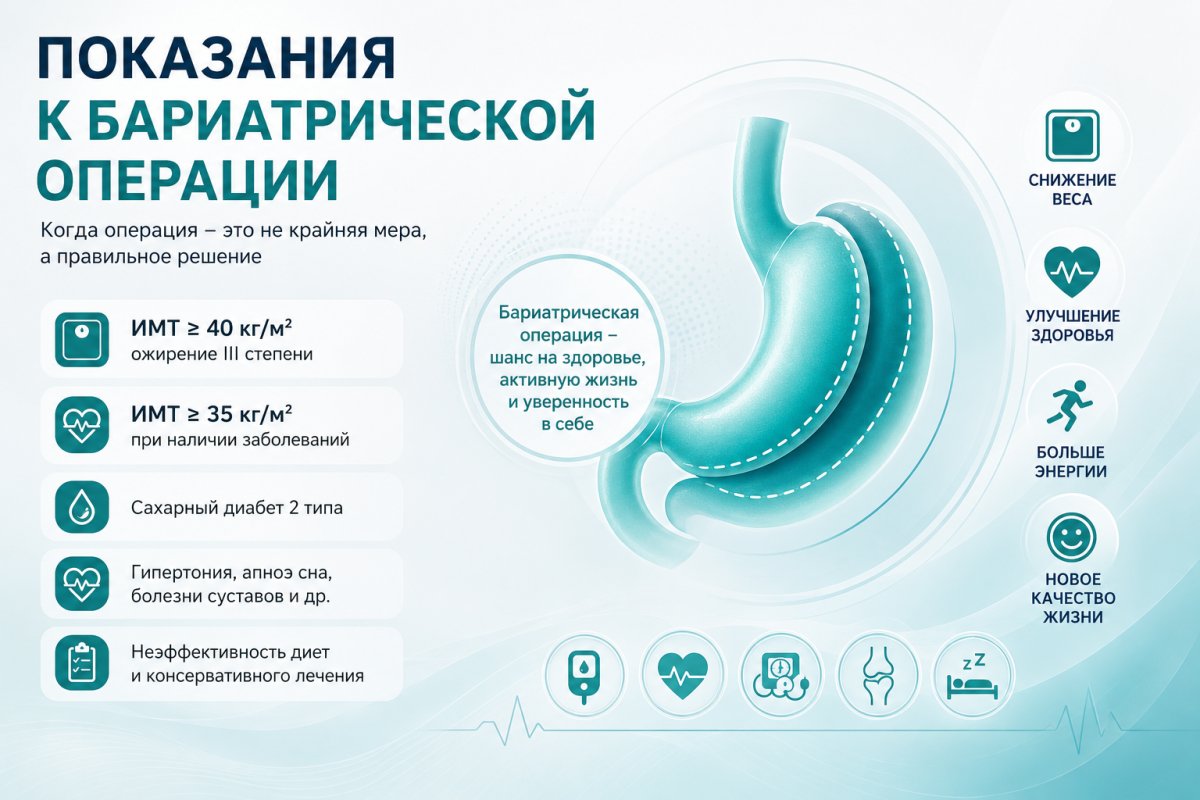


1. How the indications have changed
| Year and Source | Body Mass Index (BMI) | Features |
|---|---|---|
| 1991 (NIH Consensus) | ≥ 40, or ≥ 35 with comorbidities | Classic strict criteria |
| 2022 (ASMBS / IFSO) | ≥ 35 - regardless of comorbidities; ≥ 30 with metabolic disorders; for Asian population - ≥ 27.5 | Modern approach considering metabolic risks |
| 2025 (ASMBS Fact Sheet) | Recommendation at BMI ≥ 30 for patients with type 2 diabetes; surgery mortality ≈ 0.1%, serious complications ≈ 4% | Focus on safety and prevention of complications |
2. Current recommendations
BMI ≥ 35
I recommend surgery to all patients with such a BMI - even without comorbidities. Scientific data show that losing 25–35% of body weight after surgery significantly reduces the risk of death from cardiovascular diseases.
BMI 30–34.9
In this group, we consider surgery if there are:
-
hypertension requiring medication;
-
severe joint diseases.
Ethnic differences
For patients of Asian descent, obesity is diagnosed at BMI > 25. Surgery is considered earlier due to a higher risk of diabetes and cardiovascular diseases even at relatively low body weight.
3. Why it is important to act in time
| Indicator | Before surgery (average) | 2 years after surgery |
|---|---|---|
| BMI | 42.8 | 31.2 |
| HbA1c in type 2 diabetes (%) | 8.4 | 5.9 |
| Systolic blood pressure (mm Hg) | 148 | 125 |
| Lipids (total cholesterol, mg/dL) | 230 | 185 |
4. My summary
Bariatric surgery is metabolic treatment, not just «stomach reduction». Modern English-language studies clearly confirm: you need to act earlier than irreversible complications occur.
Sources:
-
ASMBS/IFSO Guidelines 2022
-
ASMBS Fact Sheet 2025