


 ```
```
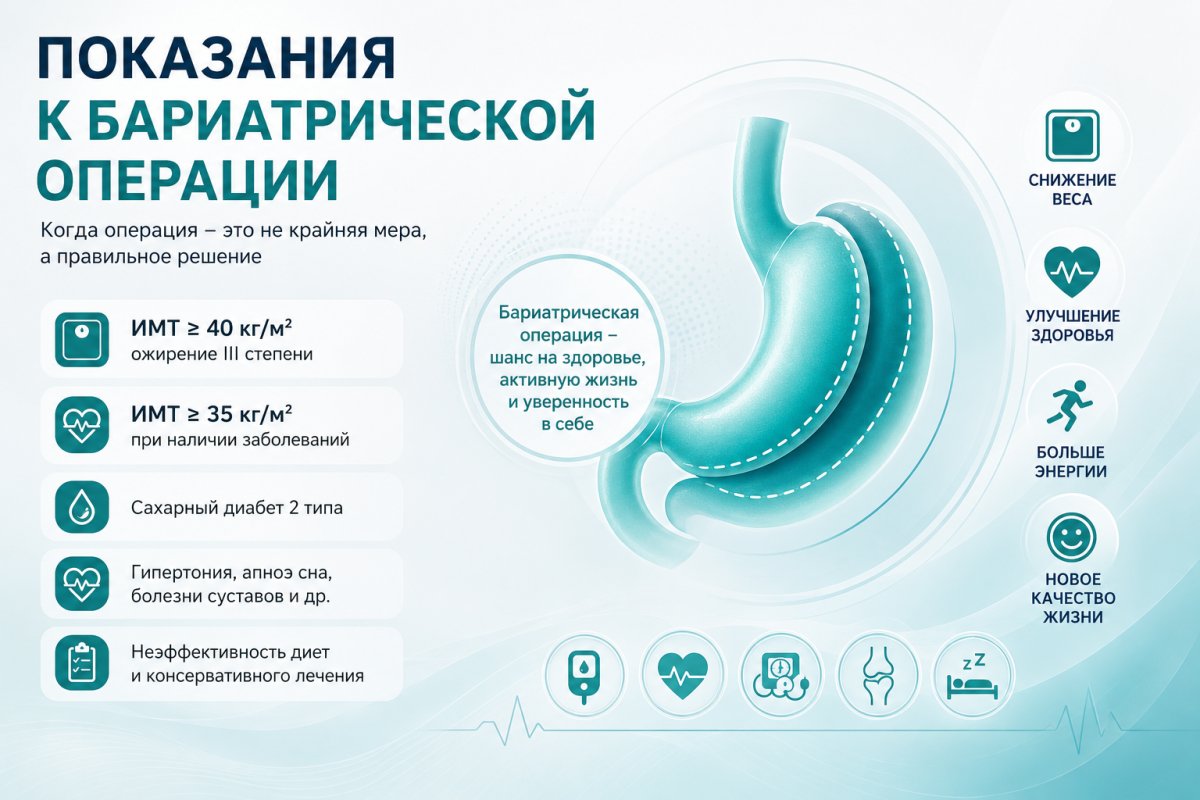
The main modern criterion for metabolic and bariatric surgery is BMI.
According to the international ASMBS/IFSO 2022 guidelines, metabolic and bariatric surgery is recommended for patients with a BMI ≥35 kg/m² regardless of the presence, absence, or severity of comorbidities.
In patients with a BMI of 30-34.9 kg/m², surgical treatment should be considered in the presence of metabolic disease, especially when non-surgical treatment methods do not provide a sufficient and sustainable result.
In patients with type 2 diabetes, current recommendations also allow metabolic surgery to be considered at a BMI of 30 kg/m² or higher.
At the same time, the decision to undergo surgery cannot be based on BMI alone. Before surgery, it is necessary to assess the patient's overall health, comorbidities, previous treatment methods, eating behavior, surgical risks, and readiness for long-term medical follow-up.
What Are the Indications for Bariatric Surgery?
Bariatric surgery is now considered much more broadly than simply a procedure for reducing body weight.
The modern term is metabolic and bariatric surgery. This is because surgical treatment can affect not only body weight but also metabolic diseases associated with excess body weight.
That is why, when determining whether surgery is indicated, I assess the patient based on more than weight alone.
As a bariatric surgeon, several questions are important to me:
- What is the patient's BMI?
- Does the patient have type 2 diabetes?
- Is arterial hypertension present?
- Does the patient have obstructive sleep apnea syndrome?
- Are there other metabolic disorders?
- Has the patient previously achieved sustained weight loss?
- How significantly does excess body weight affect quality of life?
- Are there any contraindications to surgery?
- Is the patient ready to follow recommendations after surgical treatment?
Thus, the indications for bariatric surgery are not determined by a specific weight alone, but by a combination of medical factors.
What Do IFSO and ASMBS Recommend?
In 2022, the International Federation for the Surgery of Obesity and Metabolic Disorders (IFSO) and the American Society for Metabolic and Bariatric Surgery (ASMBS) jointly published updated international guidelines.
The document is entitled:
2022 ASMBS/IFSO Indications for Metabolic and Bariatric Surgery.
It significantly updated the criteria that had previously been based on the 1991 NIH recommendations.
The official document is available on the IFSO website:
ASMBS/IFSO 2022 - Official IFSO Guidelines
The guidelines themselves note that the new criteria represent a significant update to the approach established in 1991.
BMI of 35 kg/m² or Higher
This is one of the main categories of patients for whom current guidelines support surgical treatment.
At a BMI ≥35 kg/m², metabolic and bariatric surgery is recommended regardless of the presence, absence, or severity of comorbidities.
This is fundamentally different from the older approach, according to which patients with a BMI of 35-39.9 kg/m² needed to have certain associated diseases in order to qualify for surgery.
Today, the presence of diabetes, hypertension, or sleep apnea is not a mandatory condition for considering surgery in a patient with this BMI.
However, this does not mean that every person with a BMI of 35 automatically needs surgical intervention.
BMI determines whether surgery can be considered, while the final decision is made after a comprehensive medical assessment of the patient.
BMI of 30-34.9 kg/m²
This is a more complex category.
At a BMI of 30-34.9 kg/m², surgery may primarily be considered for patients with metabolic diseases when non-surgical treatment does not provide a sufficient and sustainable result.
This is where an individual assessment is particularly important.
For example, a patient with a BMI of 32 kg/m² and well-controlled health without significant metabolic disease and a patient with the same BMI but with type 2 diabetes and significant metabolic disorders represent different clinical situations.
Therefore, the decision cannot be made based solely on the BMI table.
The ASMBS/IFSO guidelines specifically state that metabolic and bariatric surgery should be considered in patients with metabolic disease and a BMI of 30-34.9 kg/m².
Type 2 Diabetes and Bariatric Surgery
Type 2 diabetes is particularly important when choosing a treatment strategy.
Metabolic surgery can affect not only body weight but also the metabolic processes associated with diabetes.
Therefore, in a patient with type 2 diabetes and a BMI of 30 kg/m² or higher, metabolic surgery may be considered even when the BMI does not reach 35 kg/m².
At the same time, surgery should not be viewed as a universal replacement for medical treatment.
Before surgery, it is necessary to assess:
- duration of diabetes;
- degree of disease control;
- medications being used;
- presence of complications;
- pancreatic function;
- cardiovascular health;
- other medical conditions.
The goal of metabolic surgery in this situation is not only weight reduction but also improvement of metabolic control.
Why the Old Rule "BMI 40 or 35 + Comorbidities" Is No Longer Sufficient
Many patients still receive information based on the old criteria:
BMI 40 or higher - surgery may be considered.
BMI 35 or higher - surgery may be considered only in the presence of comorbidities.
This approach reflected the criteria established in the 1991 NIH recommendations.
However, over the following decades, significantly more scientific evidence has accumulated regarding the long-term outcomes of metabolic and bariatric surgery.
This is why ASMBS and IFSO issued updated recommendations in 2022.
IFSO explicitly states that the new recommendations were developed as a significant update to the 1991 NIH criteria.
Therefore, when evaluating patients today, it is more appropriate to follow current international recommendations rather than relying exclusively on criteria established more than three decades ago.
BMI-Based Indications Table
| BMI | Modern approach |
|---|---|
| Below 30 kg/m² | Bariatric surgery is generally not a standard treatment option |
| 30-34.9 kg/m² | Surgery may be considered in the presence of metabolic disease and insufficient effectiveness of non-surgical treatment |
| ≥35 kg/m² | Metabolic and bariatric surgery is recommended regardless of the presence of comorbidities |
| ≥40 kg/m² | Strong indication to consider metabolic and bariatric surgery |
This table is a simplified clinical representation of the ASMBS/IFSO recommendations. It does not replace an individual consultation with a surgeon.
Why BMI Alone Is Not Enough
BMI is a useful tool for an initial assessment, but it does not fully characterize a person's health.
For example, two patients may have the same BMI but completely different health risks.
One may have no significant metabolic disease.
The other may have several conditions simultaneously:
- type 2 diabetes;
- arterial hypertension;
- obstructive sleep apnea syndrome;
- dyslipidemia;
- liver disease;
- limited physical activity;
- significantly reduced quality of life.
Therefore, a comprehensive approach is essential in modern bariatric surgery.
Which Diseases Are Particularly Important When Making the Decision?
During the assessment, I pay attention to diseases and conditions that may be associated with excess body weight.
In particular:
Type 2 Diabetes
One of the most important metabolic diseases for which metabolic surgery may be considered.
Arterial Hypertension
High blood pressure increases long-term cardiovascular risk and is frequently associated with excess body weight.
Obstructive Sleep Apnea
Sleep-related breathing disorders can significantly affect quality of life and the cardiovascular system.
Dyslipidemia
Changes in lipid metabolism should also be taken into account when assessing the patient comprehensively.
Liver Disease
Metabolic disorders may be associated with changes in liver health, including metabolic dysfunction-associated steatotic liver disease.
However, the presence or absence of a specific disease should not be considered in isolation.
Is It Necessary to Try Dieting First?
There is no universal rule requiring a patient to spend years unsuccessfully trying to lose weight on their own.
Dietary changes, increased physical activity, behavioral therapy, and pharmacological treatment remain important components of comprehensive treatment.
However, a chronic disease requires a long-term strategy.
If non-surgical methods do not provide clinically meaningful and sustainable weight loss, and appropriate indications are present, other treatment options, including metabolic and bariatric surgery, should be discussed.
At the same time, the surgeon's task is not simply to offer surgery, but to determine which patient is likely to receive greater benefit from it than potential risk.
Age and Bariatric Surgery
Age should not be considered the sole criterion that automatically excludes a patient from surgery.
Current recommendations allow metabolic and bariatric surgery to be performed in carefully selected older patients.
In such cases, it is particularly important to assess:
- cardiovascular risk;
- respiratory function;
- physical functional status;
- presence of sarcopenia;
- frailty;
- comorbidities;
- ability to follow postoperative recommendations.
Thus, the decision is not based on whether a patient is "too old" or "young enough," but on an individual assessment of medical risk and potential benefit.
Bariatric Surgery in Adolescents
Current recommendations also allow metabolic and bariatric surgery to be considered in appropriately selected children and adolescents.
This is particularly important in severe forms of excess body weight and in the presence of related diseases.
However, surgical treatment in childhood and adolescence should be provided within a specialized healthcare system involving a multidisciplinary team.
IFSO/ASMBS specifically state that appropriately selected children and adolescents may also be considered candidates for metabolic and bariatric surgery.
Why Are Different BMI Thresholds Used for Asian Populations?
An interesting feature of the IFSO/ASMBS recommendations is that universal BMI thresholds are not equally applicable to all ethnic populations.
For patients of Asian origin, international guidelines recommend using lower BMI thresholds.
The document states that a BMI ≥25 kg/m² in Asian patients may correspond to clinically significant obesity, and at a BMI ≥27.5 kg/m², metabolic and bariatric surgery should be considered.
This demonstrates an important principle of modern medicine: the same BMI value does not necessarily represent the same metabolic risk across different populations.
What Tests Are Needed Before Surgery?
Determining whether surgery is indicated is only the first step.
Once a patient is considered a potential candidate for surgical treatment, a comprehensive preoperative assessment is performed.
Depending on the clinical situation, this may include:
- complete blood count;
- blood chemistry tests;
- liver function tests;
- kidney function tests;
- blood glucose;
- HbA1c;
- lipid profile;
- iron and iron metabolism markers;
- vitamin B12;
- folic acid;
- vitamin D;
- electrocardiogram;
- sleep apnea risk assessment;
- gastroscopy when indicated;
- abdominal ultrasound;
- endocrinologist consultation;
- cardiologist consultation;
- other tests as clinically indicated.
The scope of the assessment is determined individually.
What Else Does a Bariatric Surgeon Assess?
Before surgery, it is necessary to confirm not only the presence of formal indications.
It is important to determine whether the patient can safely undergo surgery and follow the recommendations afterward.
I always discuss the following with the patient:
Nutrition
After surgery, the volume and nature of food intake change. The patient should understand these changes in advance.
Vitamins and Micronutrients
After certain types of bariatric surgery, lifelong vitamin and mineral supplementation and laboratory monitoring may be necessary.
Physical Activity
Surgical treatment does not eliminate the need for physical activity.
Medical Follow-Up
Bariatric surgery requires long-term medical follow-up.
Realistic Expectations
Surgery should not be viewed as a way to obtain a guaranteed result without the patient's continued participation.
When Might Surgery Not Be the Best Option?
Even when the appropriate BMI criteria are met, surgical treatment may be temporarily postponed or considered unsuitable.
Possible reasons include:
- severe uncontrolled comorbid disease;
- high anesthetic risk;
- lack of readiness to follow postoperative recommendations;
- active eating disorders requiring prior treatment;
- certain psychological or behavioral conditions that interfere with safe treatment;
- inability to ensure the necessary postoperative follow-up.
This does not necessarily mean that the patient will permanently lose the opportunity to undergo surgery.
In many cases, the patient's condition must first be stabilized, additional treatment provided, and the question of surgery revisited afterward.
How Do I Decide Whether Surgery Is Necessary?
During a consultation, I try to answer not the question:
"Does my weight meet the criteria for surgery?"
but a much more important question:
"Will metabolic and bariatric surgery be the optimal treatment method for this particular patient?"
To answer this, four main areas are assessed:
1. Anthropometric Parameters
BMI, body weight, and weight trajectory.
2. Metabolic Health
Diabetes, blood pressure, lipid metabolism, and other related diseases.
3. Previous Treatment
Which treatment methods have already been used and what results they produced.
4. Readiness for Long-Term Treatment
The patient's understanding of the surgery, lifestyle changes, and the need for long-term follow-up.
Only after this assessment can a specific surgical procedure be discussed.
Which Operation Is Best?
There is no single universal bariatric procedure that is equally suitable for every patient.
Depending on the clinical situation, the following procedures may be considered:
- laparoscopic sleeve gastrectomy;
- gastric bypass;
- other modern metabolic and bariatric procedures;
- revisional or conversion procedures in selected cases.
The choice depends on multiple factors.
For example, the presence of significant gastroesophageal reflux, type 2 diabetes, anatomical characteristics of the stomach, previous operations, and other conditions may influence the choice of surgical technique.
Therefore, the question "Which operation is best?" is more appropriately replaced with:
"Which operation is optimal for this particular patient?"
Frequently Asked Questions
Can I have bariatric surgery with a BMI of 35 if I do not have diabetes?
Yes. According to the ASMBS/IFSO recommendations, metabolic and bariatric surgery is recommended at a BMI ≥35 kg/m² regardless of the presence or absence of comorbidities.
If my BMI is 32, is surgery impossible?
Not necessarily. At a BMI of 30-34.9 kg/m², surgery may be considered in the presence of metabolic disease and an insufficient response to non-surgical treatment.
Do I need diabetes if my BMI is 35?
No. At a BMI ≥35 kg/m², diabetes is not a mandatory condition for considering surgery.
Can surgery be performed at a BMI of 30?
In selected clinical situations, yes, particularly in the presence of metabolic disease. The final decision is made after a medical assessment.
Do I have to spend a long time dieting first?
There is no universal requirement to follow unsuccessful diets for years. However, the results of previous non-surgical treatment are an important part of the patient's assessment.
Can bariatric surgery be performed after the age of 60?
Age alone is not sufficient reason to refuse surgery. Overall health, comorbidities, functional status, and surgical risk must be assessed.
Is bariatric surgery only an operation for weight loss?
No. The modern term "metabolic and bariatric surgery" reflects the fact that the procedure can affect metabolic diseases, not only body weight.
The Most Important Things Patients Should Know
Current international IFSO and ASMBS recommendations have changed the approach to determining indications for bariatric surgery.
At a BMI ≥35 kg/m², surgery is recommended regardless of the presence of comorbidities.
At a BMI of 30-34.9 kg/m², surgical treatment may be considered in the presence of metabolic disease and insufficient effectiveness of non-surgical methods.
In patients with type 2 diabetes, metabolic surgery may be considered starting at a BMI ≥30 kg/m².
However, no single number should be interpreted separately from the clinical assessment.
Bariatric surgery is not simply a way to reduce weight. It is a treatment method for a chronic disease that requires appropriate patient selection, preparation, selection of the appropriate procedure, and long-term follow-up.
Opinion of a Bariatric Surgeon
"I believe it is incorrect to make a decision about bariatric surgery based solely on the number on the scales. BMI helps determine whether a patient meets international criteria, but this is where the most important part begins - a comprehensive medical assessment. Our goal is not simply to reduce body weight, but to choose a safe and effective treatment strategy that will provide the patient with long-term benefit."
Bariatric Surgeon
Which International Guidelines Do We Follow?
The main source for the current criteria is the joint document:
Eisenberg D., Shikora S.A., Aarts E. et al. 2022 ASMBS/IFSO Indications for Metabolic and Bariatric Surgery.
The publication appeared in the journal Obesity Surgery and represents the joint recommendations of the American Society for Metabolic and Bariatric Surgery and the International Federation for the Surgery of Obesity and Metabolic Disorders.
Official ASMBS/IFSO 2022 document on the IFSO website
IFSO also publishes educational materials and events dedicated to implementing the new recommendations in clinical practice.
Important
The information in this article is for educational purposes only and does not replace an in-person medical consultation.
Indications for metabolic and bariatric surgery are determined individually after assessing the patient's health status, examination results, comorbidities, and the potential benefits and risks of surgical treatment.

Emir-Useinov Tair Seitkhalilovich
Surgeon and bariatric surgeon at the Bariatric Surgery Center based at Kyiv City Clinical Hospital No. 1. Specialization: bariatric and laparoscopic surgery.