


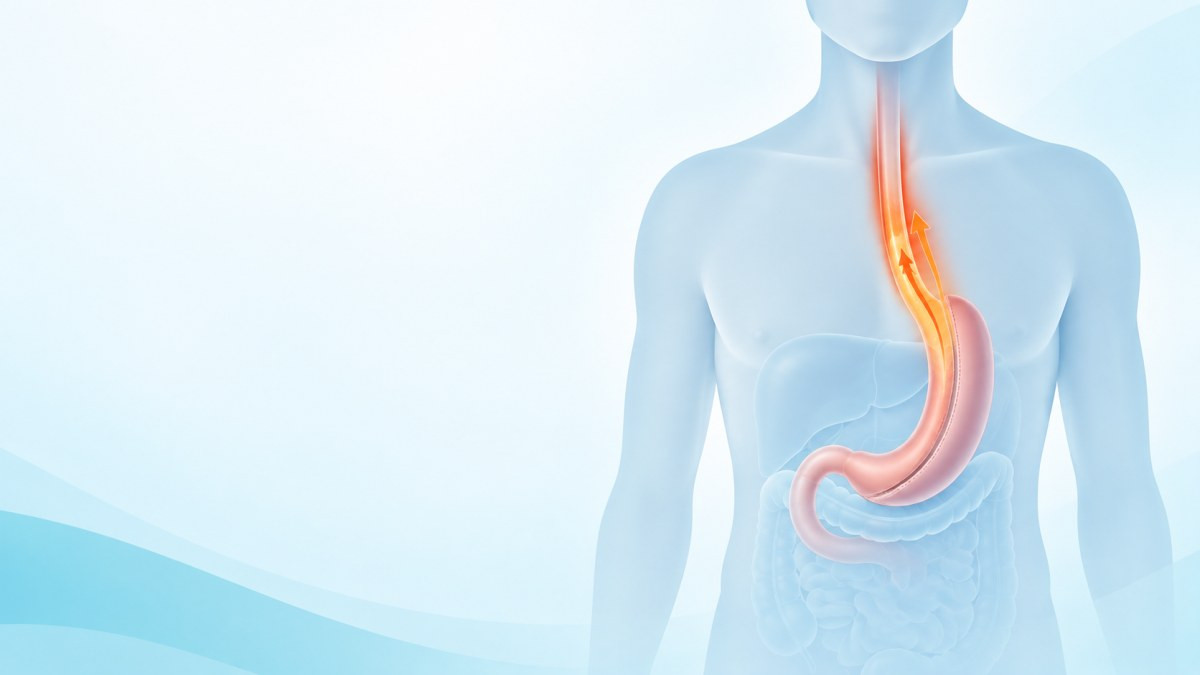
After sleeve gastrectomy, some patients develop heartburn or experience worsening of symptoms they had before surgery. A burning sensation behind the breastbone, a sour taste in the mouth, and food coming back up may be signs of gastroesophageal reflux.
This does not mean that the surgery was performed incorrectly or that another procedure will necessarily be needed. However, you should not regularly put up with heartburn or take medication on your own for months. It is important to identify the cause of the symptoms and choose appropriate treatment.
What is reflux, and how is it different from heartburn?
Gastroesophageal reflux occurs when stomach contents flow back into the esophagus. When it causes troublesome symptoms or complications, it is called gastroesophageal reflux disease (GERD).
Heartburn is one possible symptom, not proof of the diagnosis on its own.
Reflux may cause:
- a burning sensation behind the breastbone, especially after eating;
- a sour or bitter taste in the mouth;
- regurgitation, meaning liquid or food coming back up without retching;
- symptoms that worsen when lying down;
- waking up at night because of heartburn.
A cough and hoarseness can sometimes be associated with reflux, but they have many other possible causes. They should not automatically be attributed to a stomach condition.
Why can heartburn develop after sleeve gastrectomy?
During sleeve gastrectomy, a large portion of the stomach is removed, and the remaining portion is shaped into a narrow gastric sleeve. This change helps treat obesity, but it can also affect the mechanisms that prevent stomach contents from flowing back into the esophagus.
The shape of the stomach and the pressure inside it change
The stomach becomes smaller and less able to stretch. Under certain conditions, pressure inside it increases, which may contribute to reflux. Portions that are too large for the new stomach capacity and eating too quickly can worsen discomfort.
The anatomy of the junction between the esophagus and stomach changes
Protection against reflux depends not only on the lower esophageal sphincter but also on the surrounding anatomical structures. The way these structures work together changes after surgery.
A hiatal hernia may play a role
With a hiatal hernia, part of the stomach moves through an opening in the diaphragm into the chest cavity. This can impair the function of the antireflux barrier. The presence of a hernia is taken into account during evaluation and treatment planning.
Sometimes the cause is related to the shape or function of the gastric sleeve
Narrowing, kinking, or difficulty with food passing through the sleeve may cause regurgitation, vomiting, or reflux symptoms. These conditions require a separate assessment.
Not all patients develop GERD after sleeve gastrectomy. However, long-term comparative studies, including SLEEVEPASS, show that reflux and inflammation of the esophagus occur more frequently after sleeve gastrectomy than after Roux-en-Y gastric bypass.
If you had heartburn before surgery, can you still have sleeve gastrectomy?
Heartburn before bariatric surgery is important information for your surgeon. You should mention it even if your symptoms are easily relieved by your usual medication.
The choice of procedure may depend on:
- the severity and frequency of symptoms;
- upper gastrointestinal endoscopy findings;
- the presence of esophagitis, meaning inflammation of the esophagus;
- a hiatal hernia;
- the presence of Barrett's esophagus;
- other medical conditions and the expected benefits and risks of different procedures.
For patients with significant GERD, Roux-en-Y gastric bypass is often considered a more suitable option than sleeve gastrectomy. However, the idea that anyone with heartburn must have gastric bypass is too simplistic.
Gastric bypass also has its own risks and requires follow-up care. The decision is made after a comprehensive assessment.
When should you see a doctor after surgery?
Schedule an appointment if heartburn keeps returning, disrupts your sleep, requires regular medication, or is accompanied by food coming back up.
Do not delay seeking medical advice if you develop:
- difficulty or pain when swallowing;
- a feeling that food is getting stuck;
- repeated vomiting;
- an inability to drink or eat normally;
- signs of anemia or an unexplained decline in your overall health.
Emergency medical care is needed for vomiting blood, black tarry stools, severe chest or abdominal pain, shortness of breath, or fainting. Severe pain, fever, and a rapid heartbeat are particularly concerning in the early postoperative period.
You should not assume that chest pain is simply heartburn. Dangerous causes need to be ruled out first.
What tests might be needed?
Tests are selected based on your symptoms, how much time has passed since surgery, and the results of previous treatment. Not every patient needs the same set of tests.
Upper gastrointestinal endoscopy
This allows the doctor to examine the lining of the esophagus and stomach and identify esophagitis, ulcers, narrowing, and other changes. If necessary, tissue samples are taken for examination under a microscope.
Reflux testing
Ambulatory 24-hour pH monitoring or pH-impedance monitoring may be recommended to confirm reflux, assess its characteristics, or determine whether it is related to your symptoms.
Assessment of anatomy and food passage
A contrast study of the upper gastrointestinal tract can help assess the shape of the gastric sleeve and identify possible problems with the passage of its contents.
Esophageal manometry
In selected cases, this test is used to evaluate esophageal contractions and sphincter function, particularly when swallowing difficulties are present.
How is reflux treated after sleeve gastrectomy?
Treatment depends on the cause. If there is an anatomical problem, changes in eating habits or medication alone may not be enough.
Adjusting eating habits
Common recommendations include:
- eating small portions in line with your postoperative nutrition plan;
- eating slowly and chewing food thoroughly;
- stopping eating once you feel full;
- avoiding lying down immediately after meals;
- finishing your evening meal 2-3 hours before bedtime whenever possible;
- identifying foods and drinks that trigger your own symptoms.
There is no need to eliminate dozens of foods without a clear reason. Dietary restrictions should be individualized and should not prevent an adequate intake of protein and other nutrients.
For nighttime reflux, raising the head of the bed or using a wedge pillow may help. Quitting smoking is also important.
Medication
A doctor may prescribe proton pump inhibitors or other medications to treat acid reflux, depending on the clinical situation.
The medication itself is not the only important factor. Timing, treatment duration, and assessment of the response also matter. If treatment does not help, the diagnosis and cause of symptoms should be reassessed rather than simply increasing the dose on your own.
You should not stop or change prescribed medication without consulting your doctor.
When is another operation considered?
Not every patient with heartburn needs another operation.
Further surgery may be discussed if testing confirms significant reflux, appropriate medication does not provide adequate control, or an anatomical cause of the symptoms is identified.
One possible option is conversion from sleeve gastrectomy to Roux-en-Y gastric bypass. In certain circumstances, hiatal hernia repair or other procedures may also be considered.
The choice depends on your anatomy, current BMI, nutritional status, other medical conditions, and previous treatment. Another operation does not guarantee that all symptoms will disappear and requires a separate discussion of its benefits and risks.
Why is long-term follow-up important?
The severity of heartburn does not always reflect the condition of the esophageal lining. The absence of severe symptoms does not rule out esophagitis.
After sleeve gastrectomy, it is therefore important to follow the monitoring plan agreed upon with your bariatric team. The need for follow-up endoscopy and its timing are determined by the type of surgery, symptoms, previously identified changes, and current guidelines.
Frequently asked questions
Can heartburn develop several years after sleeve gastrectomy?
Yes. Reflux can develop shortly after surgery or later. New symptoms should be assessed regardless of how much time has passed.
Is endoscopy always necessary for heartburn after sleeve gastrectomy?
The decision depends on your symptoms and clinical situation. If you have difficulty swallowing, bleeding, or other warning signs, evaluation should not be delayed.
Can I take heartburn medication continuously?
Long-term treatment is sometimes necessary, but it should have a clear medical indication and be monitored. It is important to establish a diagnosis and periodically reassess the need for treatment.
Can dietary changes alone help?
They reduce symptoms in some patients. However, they may not be enough if you have esophagitis, significant GERD, or anatomical problems.
Does heartburn mean that I definitely need gastric bypass?
No. The first step is to identify the cause of the symptoms and assess nonsurgical treatment options.
Key takeaways
Heartburn after sleeve gastrectomy should not be ignored, but it should not be viewed as an inevitable reason for another operation either.
The appropriate approach is to assess the symptoms, perform tests when indicated, and choose treatment based on the cause of the reflux.
If you regularly experience heartburn, acidic belching, or food coming back up after bariatric surgery, consult a bariatric surgeon or gastroenterologist. It is helpful to bring your surgical discharge summary, previous test results, and a list of the medications you take.

Tair Emir-Useinov
Laparoscopic surgeon at the Center for Bariatric Surgery. Specializes in surgical treatment of obesity and minimally invasive procedures.

Serhii Trepet
Bariatric surgeon, Candidate of Medical Sciences, specialist in metabolic and bariatric surgery.