

When Weight Loss Stops Being Only About Willpower
Every patient comes to a bariatric surgeon with their own personal story. For some, the reason for seeking medical help is years of unsuccessful attempts to lose excess weight; for others, it is the development of diseases associated with metabolic disorders, reduced physical activity, or a decline in quality of life.
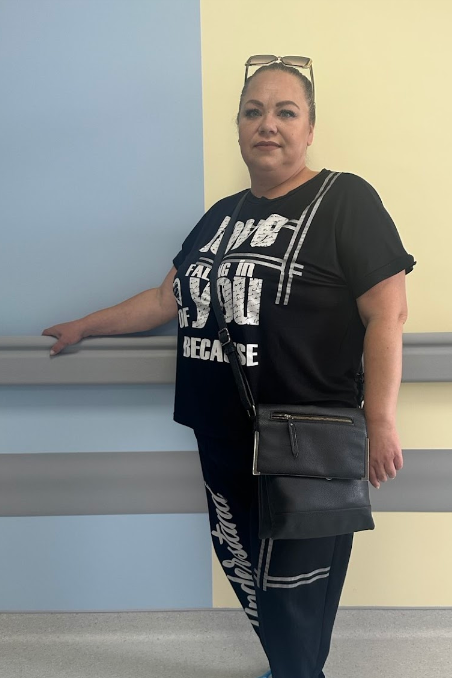
This clinical case describes a young female patient who was admitted to the Bariatric Surgery Center for planned surgical treatment of obesity.
Despite her relatively young age, the increase in body weight had already been accompanied by metabolic disorders requiring a comprehensive approach. After a complete medical evaluation and consultation with a multidisciplinary team, the decision was made to perform a laparoscopic sleeve gastrectomy (Sleeve Gastrectomy) - one of the most studied and widely performed bariatric procedures worldwide.
Patient Baseline Data
A comprehensive assessment of the patient's health status was performed before surgery.
| Parameter | Value |
|---|---|
| Height | 156 cm |
| Body weight | 86 kg |
| Body Mass Index (BMI) | 35.34 kg/m² |
| Main diagnosis | Class II obesity |
| Comorbidities | Chronic cholecystitis |
| Hospitalization | Planned |
When BMI exceeds 35 kg/m², the risk of developing type 2 diabetes mellitus, cardiovascular diseases, lipid metabolism disorders, and other complications significantly increases, especially in the presence of associated medical conditions.
Preoperative Assessment
The safety of bariatric treatment begins long before the operation itself.
Before surgery, the patient underwent a complete preoperative evaluation to assess the condition of almost all body systems.
The diagnostic program included:
- complete blood count and biochemical blood tests;
- coagulation profile;
- lipid profile assessment;
- blood glucose measurement;
- calculation of the HOMA insulin resistance index;
- gastroscopy;
- ultrasound examination of the abdominal organs;
- thyroid gland ultrasound examination;
- electrocardiography (ECG);
- echocardiography;
- screening for viral infections.
A comprehensive diagnostic evaluation confirmed the absence of contraindications to surgical treatment and helped identify risk factors requiring attention during preparation for surgery.
What Did the Examinations Reveal?
The obtained results were typical for patients with excessive body weight.
The examination revealed elevated triglyceride levels, signs of insulin resistance according to the HOMA index, while ultrasound examination confirmed the presence of chronic cholecystitis.
At the same time, gastroscopy did not reveal any pathological changes in the stomach, and echocardiography demonstrated preserved cardiac contractile function, which allowed the laparoscopic procedure to be performed safely.
This comprehensive diagnostic approach is an essential part of preparation for modern bariatric surgery and helps minimize the risk of postoperative complications.
Why Was Sleeve Gastrectomy Chosen?
Modern bariatric surgery offers several effective methods for the treatment of obesity.
However, the choice of procedure is always individualized and depends on the patient's specific characteristics.
After analyzing the examination results, BMI, metabolic disorders, and overall health condition, the specialists concluded that the optimal option for this patient was a laparoscopic sleeve gastrectomy.
The main reasons for choosing this particular procedure were:
- high effectiveness in the treatment of obesity;
- reduction of stomach volume without altering the natural passage of food;
- significant reduction in the level of the hunger hormone - ghrelin;
- proven positive effects on metabolic processes;
- good surgical tolerance;
- high safety profile.
Today, Sleeve Gastrectomy is considered one of the most frequently performed bariatric procedures worldwide.
How Was the Surgery Performed?
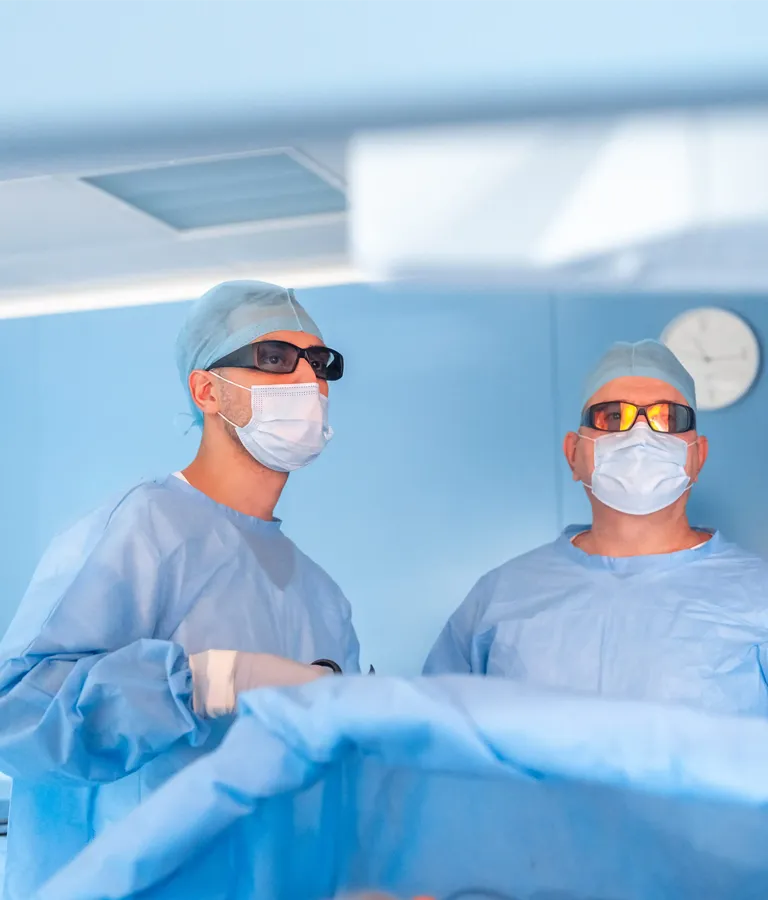
The surgical intervention was performed using a laparoscopic approach through several small incisions in the anterior abdominal wall.
This minimally invasive technique eliminates the need for a large surgical incision, significantly reduces tissue trauma, decreases postoperative pain, and accelerates patient recovery.
During the operation, the surgeon mobilized the greater curvature of the stomach, after which a new stomach in the form of a narrow tube was created using modern linear staplers.
The procedure involves removing the majority of the stomach, including the area containing the highest concentration of cells responsible for producing the hunger hormone ghrelin.
The reduction of ghrelin levels after surgery helps decrease hunger sensations and makes it easier for patients to adapt to a new eating pattern.
After formation of the gastric sleeve, a thorough inspection of the staple line and final hemostasis control were performed.
The operation was completed without technical complications.
Postoperative Period
After completion of the surgical procedure, the patient remained under the supervision of the medical team.
Hemodynamic parameters, laboratory test results, intensity of pain syndrome, and the condition of postoperative wounds were carefully monitored.
The patient received infusion therapy, thrombosis prevention measures, antibacterial prophylaxis, and adequate pain management.
Special attention was paid to early mobilization.
Modern treatment protocols recommend the earliest possible return of patients to physical activity, as this reduces the risk of thromboembolic complications and promotes faster recovery.
The postoperative period proceeded uneventfully.
There were no signs of bleeding, staple line leakage, or other postoperative complications.
Recommendations Provided to the Patient
Before discharge, an individualized follow-up plan was developed.
The recommendations included:
- following a staged postoperative nutrition plan;
- maintaining adequate fluid intake;
- avoiding heavy physical exertion;
- daily intake of a specialized vitamin and mineral complex;
- vitamin D supplementation;
- calcium supplementation;
- prevention of gallstone formation;
- regular follow-up examinations;
- laboratory monitoring at 3 and 6 months after surgery.
These recommendations correspond to modern international approaches to postoperative care for patients after bariatric procedures.
Why Surgery Is Only the Beginning of Treatment
Bariatric surgery is not a “quick weight-loss solution”. It is the beginning of a long-term process that includes changing eating habits, gradually increasing physical activity, and regular medical follow-up.
The most significant changes usually occur during the first year after surgery. During this period, it is especially important for patients to follow medical recommendations and attend scheduled follow-up appointments.
In this clinical case, it is still too early to evaluate weight-loss results because the surgery was performed recently. The patient was discharged in satisfactory condition and will continue her recovery under outpatient medical supervision.
Comment from the Bariatric Surgeon
“Every operation is not the final stage of treatment, but the beginning of a new chapter in the patient's life. Our goal is to perform the procedure safely, help the patient adapt to new conditions, and provide support throughout every stage of recovery. A comprehensive approach is what allows us to achieve sustainable results and significantly improve quality of life.”