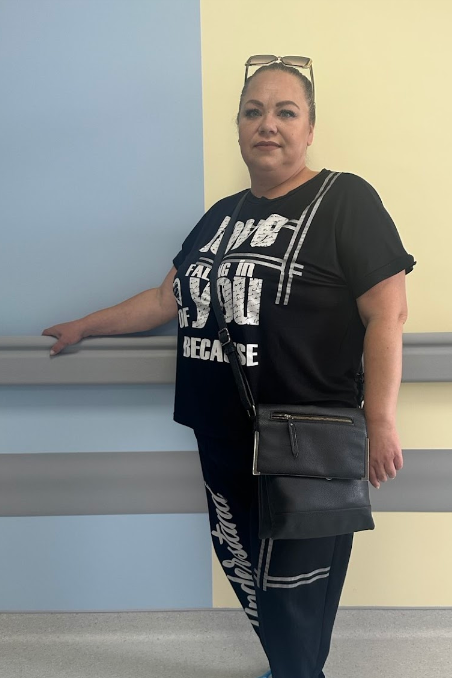


With the permission of my older cousin Natalia, I want to share her story - a story about a difficult choice, support, and a new life. I was by her side from the very beginning: at medical appointments, during the preparation period, and throughout her hospitalization. Watching her health change - from endless feelings of hunger and heaviness to energy and joyful motherhood - has been and remains the greatest reward for me. She had a tendency to gain weight since her teenage years, but until the age of 30 it did not cause serious discomfort. Everything changed when she got married and decided to have a child. After a year and a half of unsuccessful attempts, she turned to an experienced gynecologist-endocrinologist, who immediately drew attention to her weight problem.
After examinations, a serious hormonal imbalance was discovered - estrogen deficiency combined with hyperprolactinemia. This kind of imbalance doesn’t manifest only as secondary infertility; it has many symptoms. One of them was excessive hunger, which Natalia had noticed since her school years. A standard portion of food was never enough for her, she simply didn’t feel full.
For the first 5 years, doctors tried to correct the hormonal imbalance with medication, but pharmacotherapy brought no positive results. On the contrary, the impact on her metabolism was negative, and Natalia rapidly gained weight. By the age of 38, at a height of 168 cm, she weighed around 130 kg.
At that weight, carrying a pregnancy was impossible, as was leading a full life. After consulting with her doctor, Natalia decided to take a responsible step - to undergo stomach resection. Since no suitable clinic was available in her hometown, she chose to have the operation in Kyiv. Weeks of preparation and preoperative tests felt endless. According to Natalia, the preparation was far more exhausting than the procedure itself.
After surgery, she stayed in the hospital for 5 days, and by the end of the initial recovery period she was feeling well. Despite the challenging starting point, recovery was quick. The most intense weight loss happened during the first month: after returning home, she weighed 125 kg (131 kg before surgery). A month later, her weight dropped to 108 kg.
Following her gynecologist’s recommendations, Natalia monitored her blood sugar, did monthly biochemical blood tests, and checked estrogen and progesterone levels. The most unpleasant symptom during this period was nausea after meals.
Adjusting to smaller portions at home was not easy - out of habit she wanted to eat more, though she no longer experienced real hunger. Overeating immediately caused nausea. During the first 3 months, she experienced intolerance to some foods that previously had been fine for her (certain fatty fish, full-fat dairy products, sour fruits).
Gradually, Natalia adjusted her diet, found the optimal portion size, and the negative symptoms began to subside. Her weight kept decreasing, and 6 months after surgery, for the first time in many years, it fell below 100 kg. Over time, the process slowed down, but progress could be tracked not only by the scale.
The most important achievement was the change in her eating behavior. Natalia no longer suffered from constant hunger, learned to eat moderately, and finally experienced healthy satiety. There was no weakness, dizziness, sudden nausea, or vomiting during the first year of recovery. Her body responded to the changes with energy and well-being. Hormonal correction was also successful, and her test results normalized.
Natalia underwent gastric resection in 2018, and in 2022, she and her husband welcomed their long-awaited first child. During pregnancy she gained 7 kg, which she lost within the first year of caring for her baby.
Seven years after bariatric surgery, she feels great. Her current weight fluctuates between 75 and 80 kg. She remembers the doctors who helped her achieve these results and the joy of motherhood with warm gratitude every day. To everyone preparing for the procedure, she wishes success and faith in themselves!