


As a bariatric surgeon, I always explain to my patients not only the name of the procedure, but also what exactly we change in the digestive system and how these changes affect eating, satiety, and metabolic health.
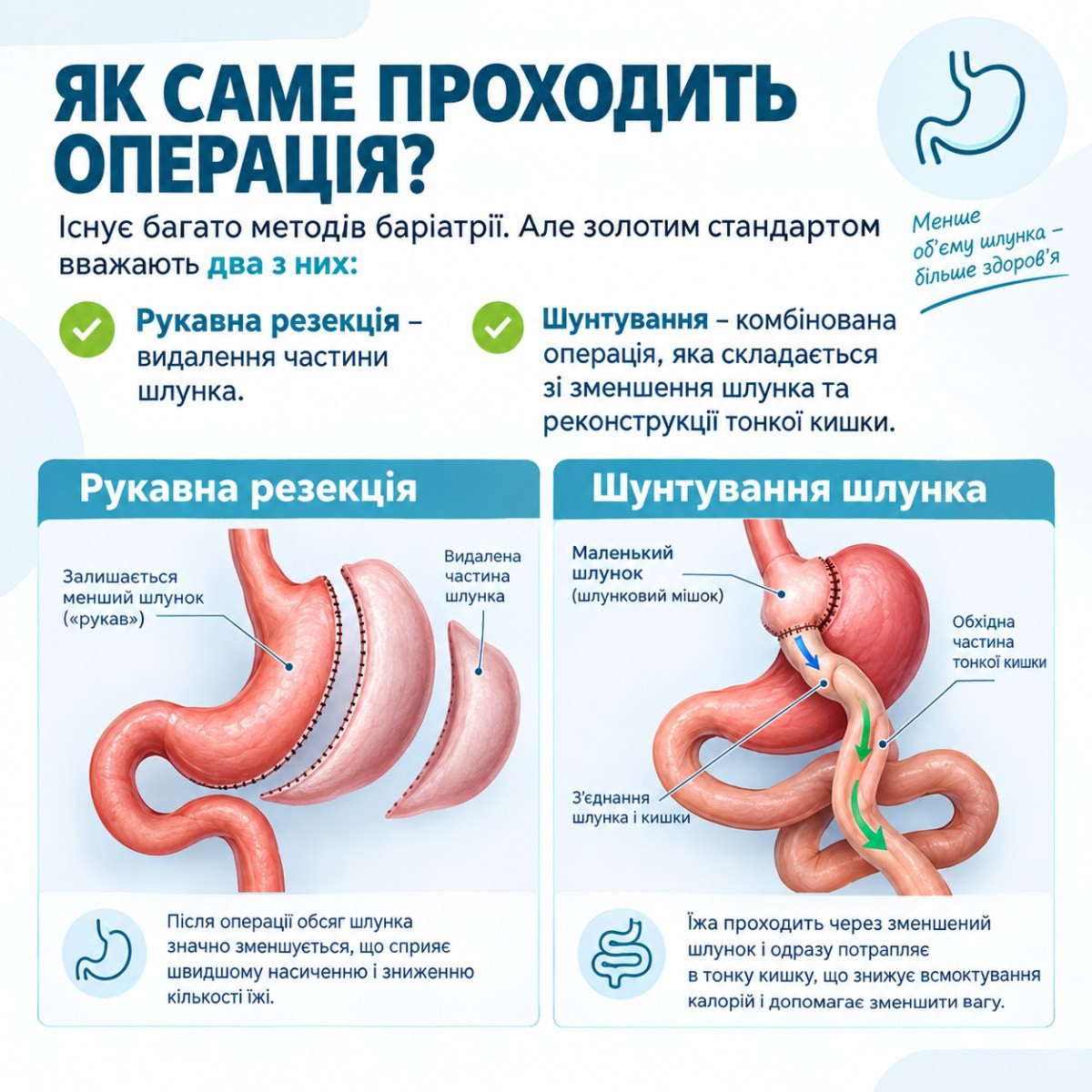
Modern bariatric surgery includes several surgical techniques. The main procedures include sleeve gastrectomy and gastric bypass. Both procedures are performed laparoscopically, but their mechanisms of action are different.
Sleeve Gastrectomy
During sleeve gastrectomy, I remove most of the stomach, leaving a narrow gastric reservoir known as a "sleeve." Food continues to pass naturally through the stomach and small intestine.
Reducing the size of the stomach limits the amount of food a patient can eat at one time. In addition to reducing stomach volume mechanically, the procedure also affects hormonal mechanisms involved in appetite. The American Society for Metabolic and Bariatric Surgery (ASMBS) notes that sleeve gastrectomy can change feelings of hunger and satiety.
Gastric Bypass
During gastric bypass, I create a small gastric pouch and alter the route through which food passes through the small intestine. Therefore, the procedure affects not only the amount of food consumed but also its subsequent digestion and absorption.
This is why gastric bypass can have a significant metabolic effect. At the same time, after this type of surgery, particular importance is placed on nutrition, taking recommended vitamins and minerals, and regular medical follow-up.
How Do I Determine Which Procedure Is Suitable for a Patient?
I do not choose a procedure based solely on a number on the scale or on a patient's preference for a particular type of surgery. During the consultation, I assess the patient's BMI, comorbidities, presence of reflux, eating behavior, examination results, previous surgeries, and other factors.
For example, significant gastroesophageal reflux or diabetes may influence the choice of surgical technique. Therefore, two patients with approximately the same body weight may be recommended different types of bariatric surgery. This individualized approach is consistent with current ASMBS and IFSO recommendations.
For me, the key question before surgery is not "which procedure is the best?", but "which technique makes the most sense for this particular patient, taking into account the potential benefits, risks, and need for long-term follow-up?"
Bariatric surgery is only one part of obesity treatment. After surgery, gradual dietary changes, physical activity, monitoring of laboratory parameters, taking vitamin and mineral supplements as recommended by the physician, and regular follow-up visits are important.

Emir-Useinov Tair Seitkhalilovich
Surgeon and bariatric surgeon at the Bariatric Surgery Center based at Kyiv City Clinical Hospital No. 1. Specialization: bariatric and laparoscopic surgery.