

Imagine you need to thread a needle. In the first case, you look at the eye of the needle with one eye. In the second - with both. The task is the same, but in the second case, judging distance and performing a precise movement becomes significantly easier.
This is exactly the principle behind 3D laparoscopy.
For the patient, the operation looks the same as standard laparoscopic surgery: several small incisions instead of a large cut, work through modern instruments, and relatively fast recovery. But for the surgeon, the difference is enormous. They receive a three-dimensional image of the surgical field and can see anatomical structures not on a flat screen, but almost in real 3D space.
In bariatric surgery, where precision is especially critical, this technology becomes an important assistant at every stage of the operation.
Why the human eye is naturally designed for 3D
In everyday life, we rarely think about how important depth perception is.
When a person pours water into a glass, parks a car, or climbs stairs, the brain constantly calculates distances to objects. This is possible because each eye sees the image from a slightly different angle.
The brain combines the two images and creates a sense of three-dimensional space.
Traditional laparoscopy for a long time lacked this advantage. Surgeons had to work with a two-dimensional image and estimate the depth of tissues, vessels, and organs on their own.
Modern 3D systems restore the natural spatial perception to which the human brain is accustomed.
What happens during bariatric surgery
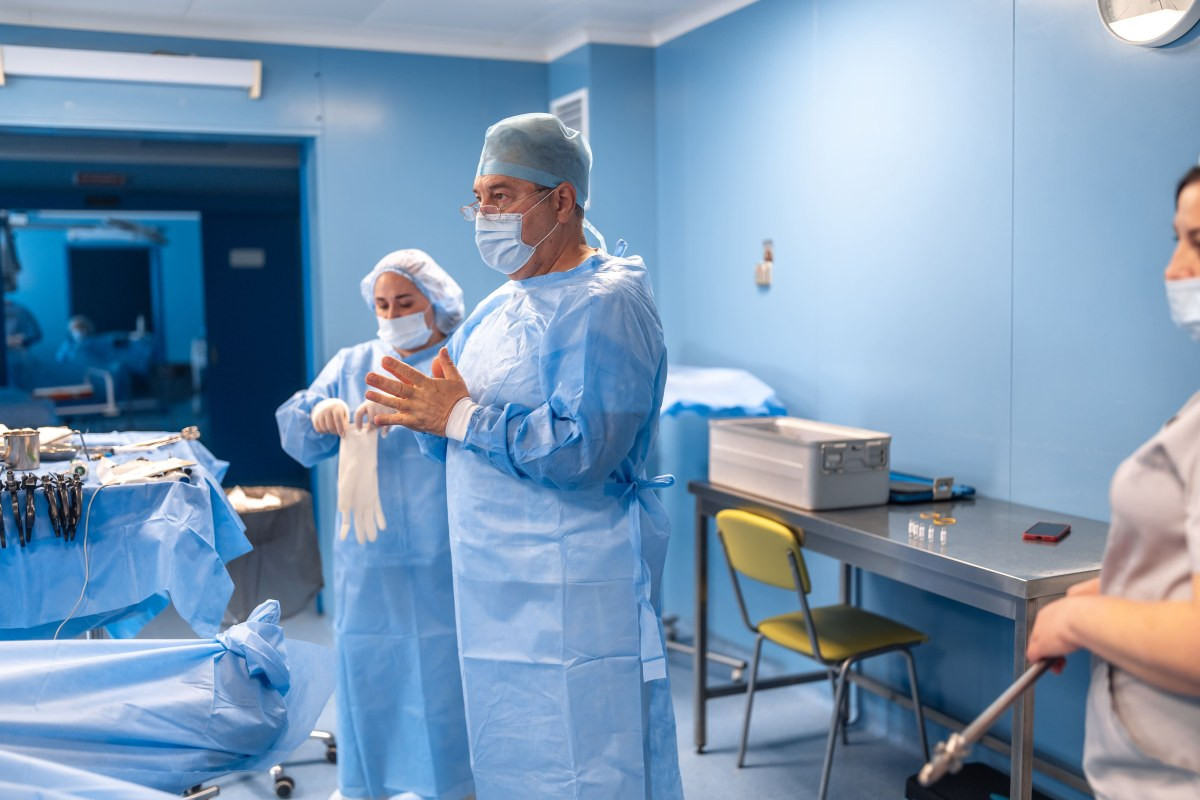
During weight-loss surgery, the surgeon works within the limited space of the abdominal cavity.
It is necessary to carefully mobilize the stomach, transect tissues using special stapling devices, control blood supply, avoid damage to surrounding structures, and in some cases create new connections between parts of the digestive system.
Each movement is performed using long laparoscopic instruments through incisions only a few millimeters wide.
Imagine a jeweler performing a complex task not directly with their hands, but using tools several dozen centimeters long. This is why the quality of visualization is so important.
What the surgical field looks like through a 3D system
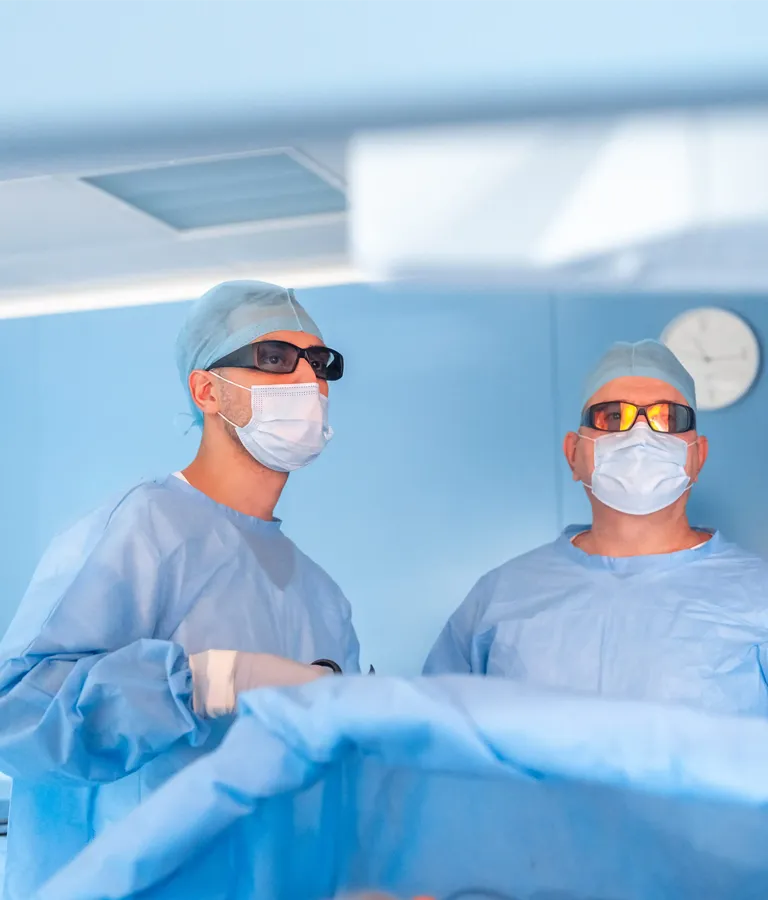
When the surgeon puts on special glasses and looks at the monitor of a 3D video tower, the image becomes volumetric.
Blood vessels, tissues, and organs no longer appear as flat elements on a screen. They are perceived as real objects positioned at different distances from one another.
This allows for faster anatomical orientation and more precise surgical manipulation.
The advantages are especially noticeable when working in deep areas of the abdominal cavity, where every detail matters and where a standard 2D image requires additional concentration to judge depth correctly.
Precision starts not with instruments, but with vision
Many patients believe that the most important part of surgery is the instruments.
In reality, the surgeon’s primary instrument is their eyes.
Even the most advanced stapling device cannot compensate for a lack of visual information. Before performing any action, the surgeon must clearly understand where the target structure is, how far it is, and which tissues are nearby.
3D visualization helps provide a more complete understanding of the surgical field before any manipulation begins.
That is why modern technology is often compared not to a new tool, but to an improvement in vision.
When technology works together with experience
It is important to understand that the success of an operation never depends solely on equipment.
A modern video tower does not make decisions, choose treatment tactics, or replace surgical experience.
It simply provides more information.
Just as a navigation system helps a driver but does not control the vehicle, 3D visualization helps the surgeon better orient themselves in the surgical field.
The best results are achieved when modern technology is combined with the experience and high qualification of the surgical team.
Why the development of bariatric surgery is linked to technology
Over the past decades, bariatric surgery has changed dramatically.
In the past, operations required large incisions and long recovery periods. Today, most procedures are performed laparoscopically through a few small punctures.
The next stage of development has been the improvement of visualization.
High-resolution imaging, magnification of the surgical field, and three-dimensional perception of space have allowed surgeons to work more precisely and confidently.
That is why leading bariatric centers around the world are actively integrating modern 3D systems into daily practice.
What this means for the patient
After waking up from surgery, the patient will not see the 3D video tower and will not know how much technology was used during the procedure.
They will see something else:
- several small incisions instead of a large wound;
- early mobilization;
- gradual weight loss;
- improved quality of life;
- a path to treating obesity-related conditions.
However, behind this outcome lies the enormous work of the surgical team and technologies that help perform every step with maximum precision.
Modern bariatric surgery is not only the experience of the doctor. It is a combination of knowledge, practice, and advanced solutions that make obesity treatment more effective and technologically advanced.
That is why 3D laparoscopy is no longer just an optional feature, but an essential part of modern weight-loss surgery.