


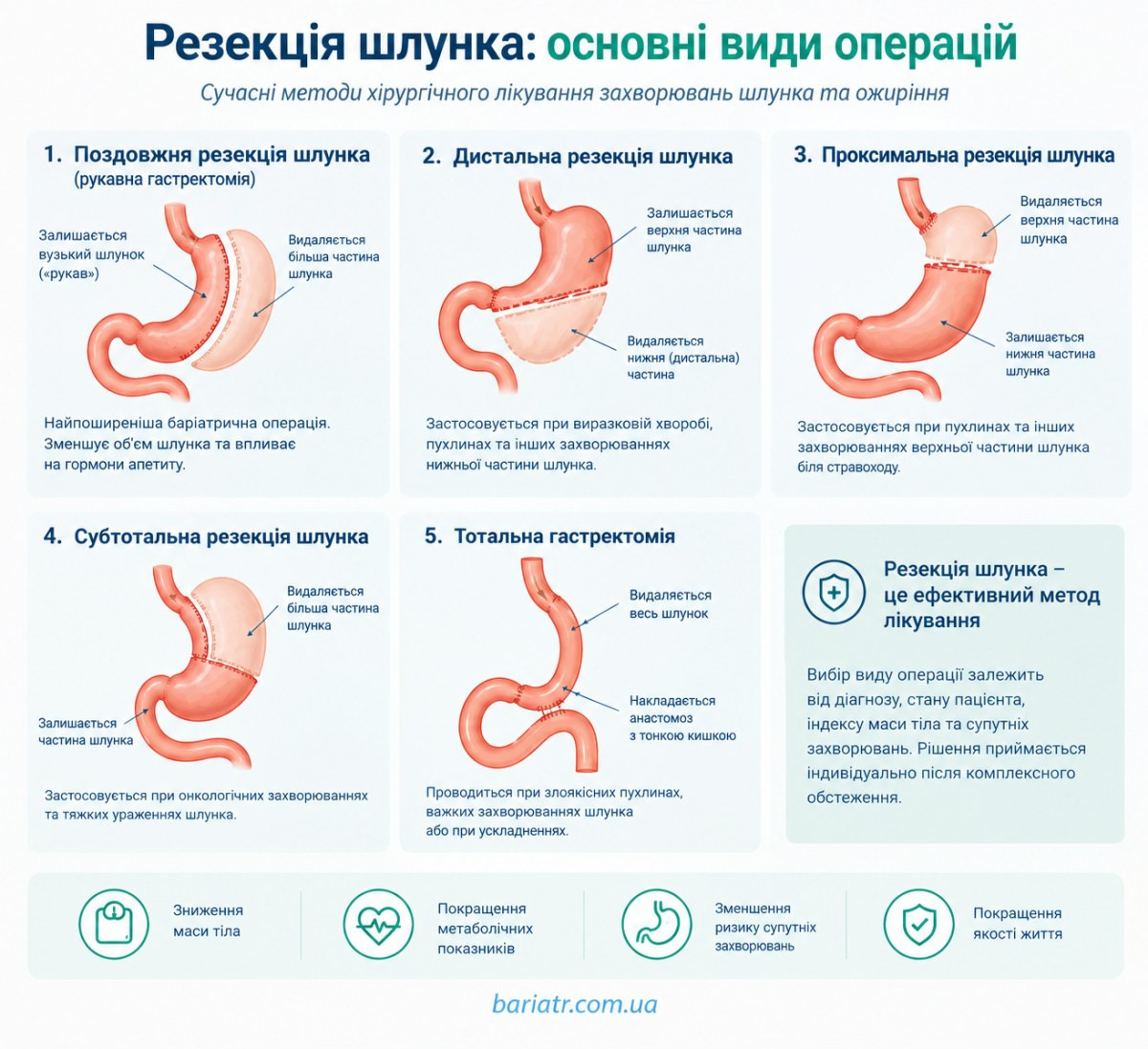
Stomach resection is a surgical procedure in which part of the stomach is removed. The extent of the resection depends on the disease, its location, and the purpose of the surgery.
Main Types of Stomach Resection
Distal resection - removal of the lower part of the stomach.
Proximal resection - removal of the upper part of the stomach, located closer to the esophagus.
Subtotal resection - removal of most of the stomach while preserving part of it.
Longitudinal stomach resection (sleeve gastrectomy) - removal of a significant part of the stomach to create a narrow gastric reservoir. This procedure is also used in bariatric surgery.
If the entire stomach needs to be removed, the procedure is called a total gastrectomy, rather than a resection of part of the stomach.
When Is Stomach Resection Performed?
Stomach resection may be performed for diseases of the stomach when it is necessary to remove an affected part of the organ. The specific type of surgery is determined after examination and assessment of the patient's condition.
Before surgery, the doctor determines the required extent of the procedure and the method of reconstruction of the digestive tract.
```html
Tair Emir-Useinov
Laparoscopic surgeon at the Center for Bariatric Surgery. Specializes in surgical treatment of obesity and minimally invasive procedures.

Serhii Trepet
Bariatric surgeon, Candidate of Medical Sciences, specialist in metabolic and bariatric surgery.