


Choosing bariatric surgery is not simply a matter of deciding which procedure is considered the best for everyone. In my practice, I explain to patients that the operation should be selected individually, taking into account their health, associated conditions, eating habits, and the specific characteristics of obesity.
The decision may depend on body mass index, type 2 diabetes, gastroesophageal reflux disease, eating patterns, previous abdominal surgery, examination results, and the patient's ability to follow recommendations after surgery.
For this reason, it is not correct to compare bariatric procedures only by the amount of weight that may be lost. Each method has its own mechanism of action, advantages, limitations, and requirements for long-term follow-up.
What Bariatric Procedures Are Used Today?
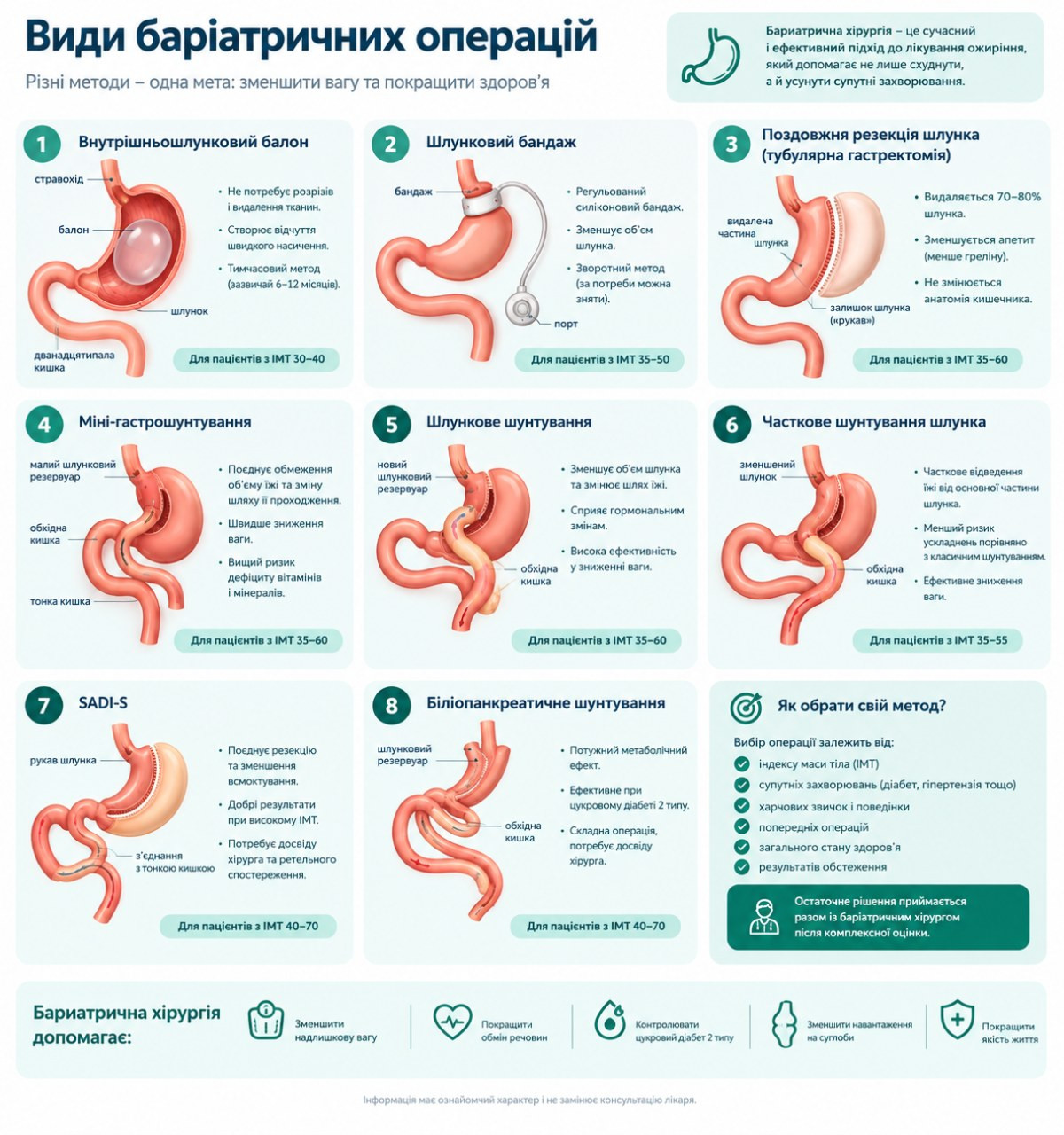
Modern metabolic and bariatric surgery includes several surgical methods. In practice, the procedures most commonly discussed with patients include:
- sleeve gastrectomy;
- Roux-en-Y gastric bypass;
- one-anastomosis gastric bypass;
- biliopancreatic diversion with duodenal switch.
Adjustable gastric banding is now used much less frequently than in the past. Current approaches to metabolic and bariatric surgery focus mainly on procedures with a substantial body of clinical evidence supporting their use.
Sleeve Gastrectomy
During sleeve gastrectomy, a substantial portion of the stomach is removed, leaving a narrow tube-shaped stomach. This reduces the amount of food that can be consumed at one time. The procedure also affects hormonal mechanisms associated with hunger and satiety.
One important feature of sleeve gastrectomy is that the intestine is not reconstructed. Food continues to pass through the digestive tract in its natural direction, while the change in stomach anatomy is permanent.
In my practice, I consider sleeve gastrectomy one of the main surgical options for treating obesity. However, before choosing this procedure, I pay particular attention to the condition of the esophagus and stomach, including the presence and severity of gastroesophageal reflux.
When May Sleeve Gastrectomy Be Considered?
- when reducing stomach volume is an appropriate treatment strategy;
- when there are no factors that make gastric bypass more suitable;
- when preserving the natural passage of food through the intestine is important;
- as one of the options within an individualized surgical treatment plan for obesity.
At the same time, sleeve gastrectomy is not a universal solution. For example, significant gastroesophageal reflux disease can substantially influence the choice of procedure.
Roux-en-Y Gastric Bypass
During Roux-en-Y gastric bypass, a small gastric pouch is created and connected to the small intestine. This changes both the amount of food that can be accommodated by the stomach and the route through which food passes through the digestive system.
This is an important difference from sleeve gastrectomy. Gastric bypass affects not only stomach volume but also the way food passes through the intestine and how nutrients are absorbed.
For this reason, nutrition, laboratory monitoring, prevention of vitamin and micronutrient deficiencies, and regular medical follow-up are particularly important after this type of surgery.
In my practice, I consider gastric bypass in situations where its specific characteristics may provide clinical advantages compared with other surgical options.
Why May Gastric Bypass Be Chosen?
In certain combinations of obesity and associated diseases, gastric bypass may be an appropriate treatment option. Gastroesophageal reflux disease is also an important consideration because its presence can influence the choice between sleeve gastrectomy and gastric bypass.
At the same time, gastric bypass has its own specific features. The anatomy of the digestive tract is changed, nutritional management becomes particularly important, and long-term monitoring of nutritional status is required.
One-Anastomosis Gastric Bypass
One-anastomosis gastric bypass differs from Roux-en-Y gastric bypass in the reconstruction of the digestive tract and the number of intestinal connections created during surgery.
The procedure combines a reduction in stomach volume with changes in the passage of food through the intestine. However, it would be incorrect to describe it simply as a "simpler form of gastric bypass." It has its own indications, nutritional considerations, and potential consequences that should be discussed before surgery.
When choosing between sleeve gastrectomy, Roux-en-Y gastric bypass, and one-anastomosis gastric bypass, I focus not on the popularity of a particular technique but on the patient's individual clinical situation.
Biliopancreatic Diversion with Duodenal Switch
Biliopancreatic diversion with duodenal switch is a more complex form of metabolic surgery. It combines a reduction in stomach volume with a substantial change in the absorption of nutrients in the intestine.
The procedure may be considered in patients with severe obesity and in selected clinical situations. At the same time, it requires particularly careful long-term follow-up, nutritional management, and monitoring of protein, vitamin, and mineral status.
Therefore, this procedure should not be selected solely on the basis of potential weight reduction. The patient's ability to maintain long-term medical follow-up must also be considered.
Comparison of Bariatric Procedures
| Procedure | Main mechanism | Is the intestine altered? | Important considerations |
|---|---|---|---|
| Sleeve gastrectomy | Reduction of stomach volume and hormonal changes | No | Permanent reduction in stomach size; reflux should be carefully assessed |
| Roux-en-Y gastric bypass | Reduction of gastric volume and alteration of food passage | Yes | Vitamin and micronutrient monitoring and specific nutritional management |
| One-anastomosis gastric bypass | Reduction of stomach volume and changes in nutrient absorption | Yes | Individual nutritional management and monitoring of nutritional status |
| Duodenal switch | Reduction of food intake combined with substantial changes in nutrient absorption | Yes | Complex procedure requiring particularly careful long-term follow-up |
What Should Be Considered When Choosing a Bariatric Procedure?
I recommend starting not with the name of a particular operation, but with an assessment of the patient's overall situation. Several factors are important during the consultation.
Body Mass Index
Body mass index helps assess the severity of obesity and determine whether surgical treatment may be appropriate. However, modern recommendations do not rely on BMI alone. Obesity-related diseases and the patient's overall health are also taken into consideration.
For this reason, I assess not only body weight but the complete clinical picture when discussing surgical treatment.
Type 2 Diabetes and Other Metabolic Conditions
When a patient has type 2 diabetes, impaired glucose metabolism, or other metabolic conditions, the choice of procedure may differ from that in a patient whose main concern is excess body weight alone.
Before surgery, I therefore assess not only weight but also medical conditions associated with obesity.
Gastroesophageal Reflux Disease
Heartburn, acid regurgitation, inflammation of the esophagus, or diagnosed gastroesophageal reflux disease should be taken into account when selecting a procedure.
This is one of the factors that can significantly influence the choice between sleeve gastrectomy and gastric bypass.
Eating Habits
It is important to understand how a patient eats before surgery. Large portions, frequent snacking, sugary drinks, high-calorie foods, and other eating patterns may all be relevant when planning treatment.
Surgery changes the physiological conditions under which food is consumed, but it does not eliminate the need to develop appropriate long-term eating habits.
Ability to Follow Long-Term Recommendations
Bariatric surgery does not complete obesity treatment on the day of the procedure. After surgery, patients require medical follow-up, gradual progression of their diet, adequate protein intake, and adherence to recommendations regarding vitamin and mineral supplementation.
This is particularly important after procedures that alter the passage of food through the intestine. Long-term follow-up is therefore an important part of bariatric treatment.
Which Is Better: Sleeve Gastrectomy or Gastric Bypass?
There is no universal answer to this question.
Sleeve gastrectomy does not involve reconstruction of the intestine, while gastric bypass changes the anatomy of the digestive tract. At the same time, in certain clinical situations, gastric bypass may offer advantages that make it a more appropriate option.
I therefore do not recommend choosing a procedure solely on the basis of patient reviews or because one technique is currently more popular. For one patient, sleeve gastrectomy may be the more appropriate option, while for another, gastric bypass may have stronger clinical indications.
Can a Patient Choose the Bariatric Procedure Independently?
A patient can and should learn about different procedures in advance and prepare questions for the consultation. However, the final decision should be made after a medical assessment and the necessary diagnostic evaluation.
During a consultation, I discuss not only the expected changes after surgery but also the limitations of each procedure, possible complications, nutritional requirements, the need for vitamin supplementation, and long-term follow-up.
This approach allows bariatric surgery to be viewed not as an isolated procedure, but as part of comprehensive and long-term obesity treatment.
What I Consider Before Choosing a Procedure
- BMI and changes in body weight over time;
- type 2 diabetes and other metabolic conditions;
- arterial hypertension and cardiovascular risk factors;
- gastroesophageal reflux disease and stomach conditions;
- eating habits and eating behavior;
- previous abdominal surgery;
- laboratory and instrumental examination results;
- the patient's ability to follow postoperative recommendations;
- the need for long-term medical follow-up.
The combination of these factors helps determine which surgical approach has the strongest clinical rationale for a particular patient.
The Main Principle When Choosing Bariatric Surgery
I do not recommend viewing bariatric surgery as a competition between procedures. Every operation has its own mechanism of action, indications, limitations, and requirements for follow-up.
Sleeve gastrectomy, Roux-en-Y gastric bypass, one-anastomosis gastric bypass, and more complex metabolic procedures differ not only in surgical technique but also in their effects on eating, digestion, metabolism, and long-term medical care.
Therefore, instead of asking, "Which operation is the best?", I recommend asking, "Which procedure is most appropriate for my particular situation, and why?" This is the question I believe should form the basis of a discussion about surgical treatment of obesity.

Emir-Useinov Tair Seitkhalilovich
Surgeon and bariatric surgeon at the Bariatric Surgery Center based at Kyiv City Clinical Hospital No. 1. Specialization: bariatric and laparoscopic surgery.