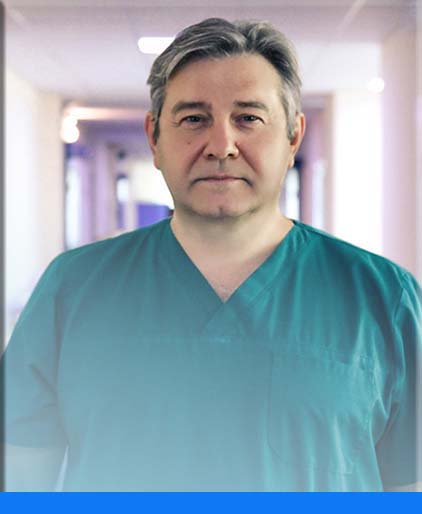
Serhiy Olehovych Trepet
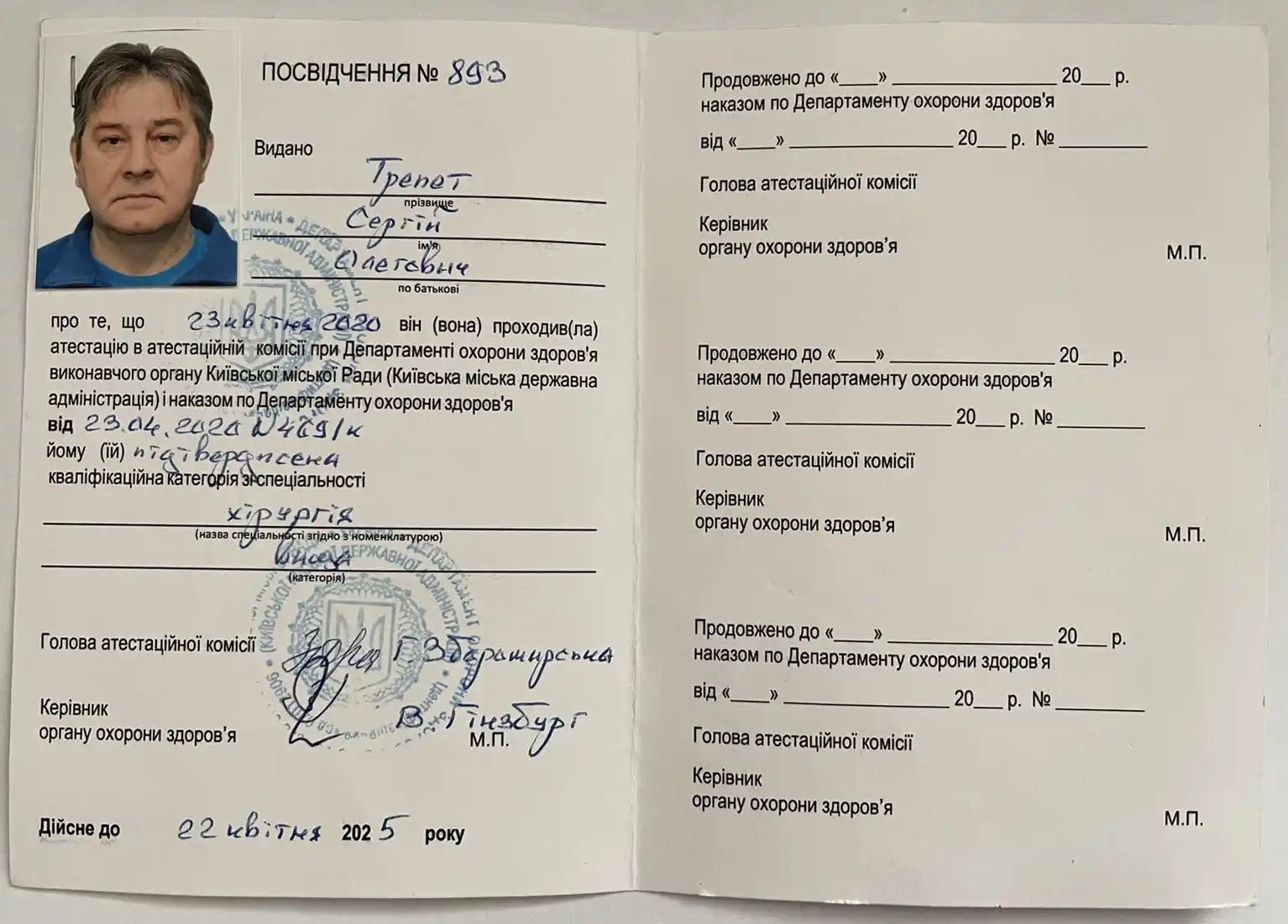
Surgeon of the highest category. Candidate of Medical Sciences. Work experience – 40 years.
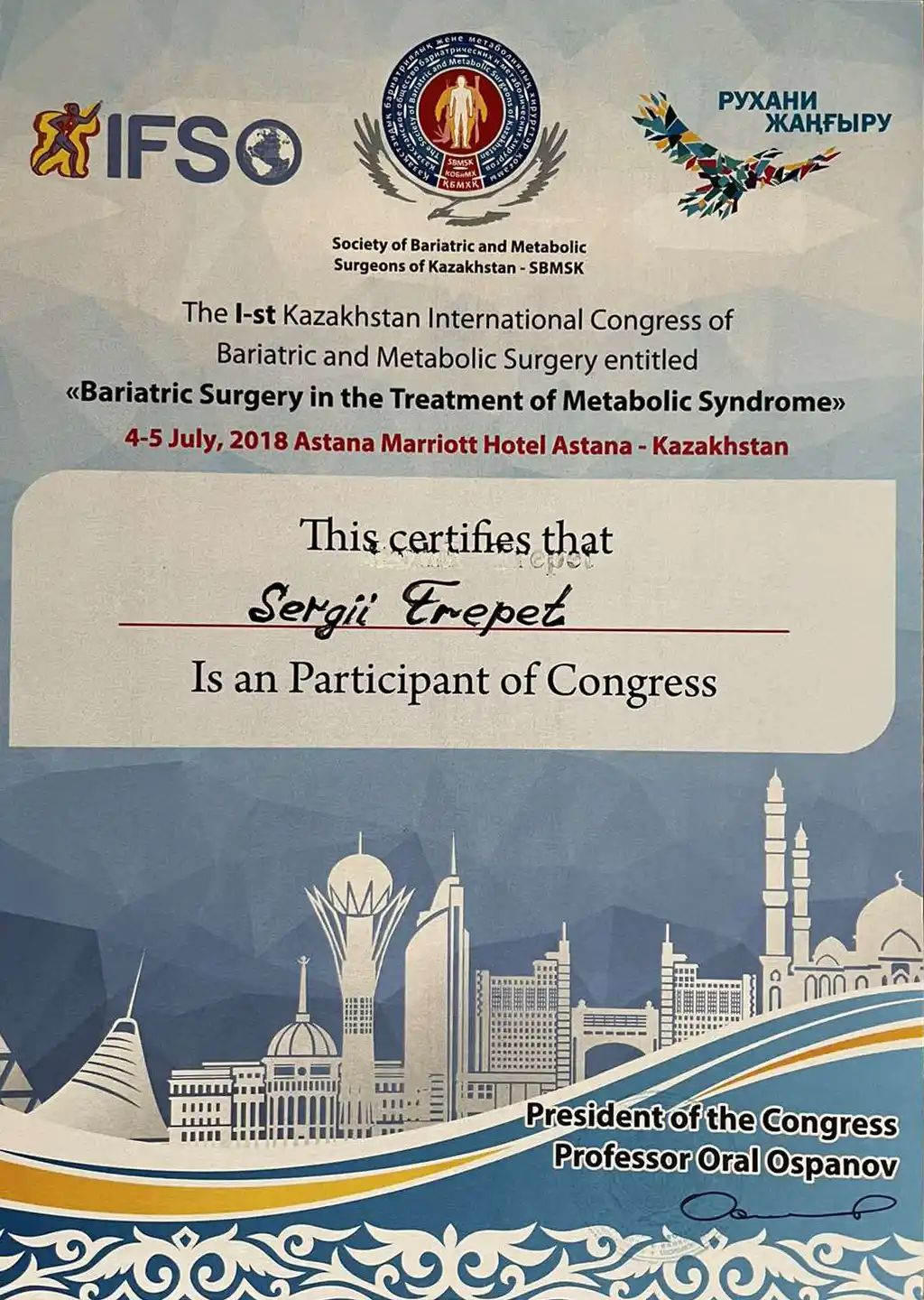
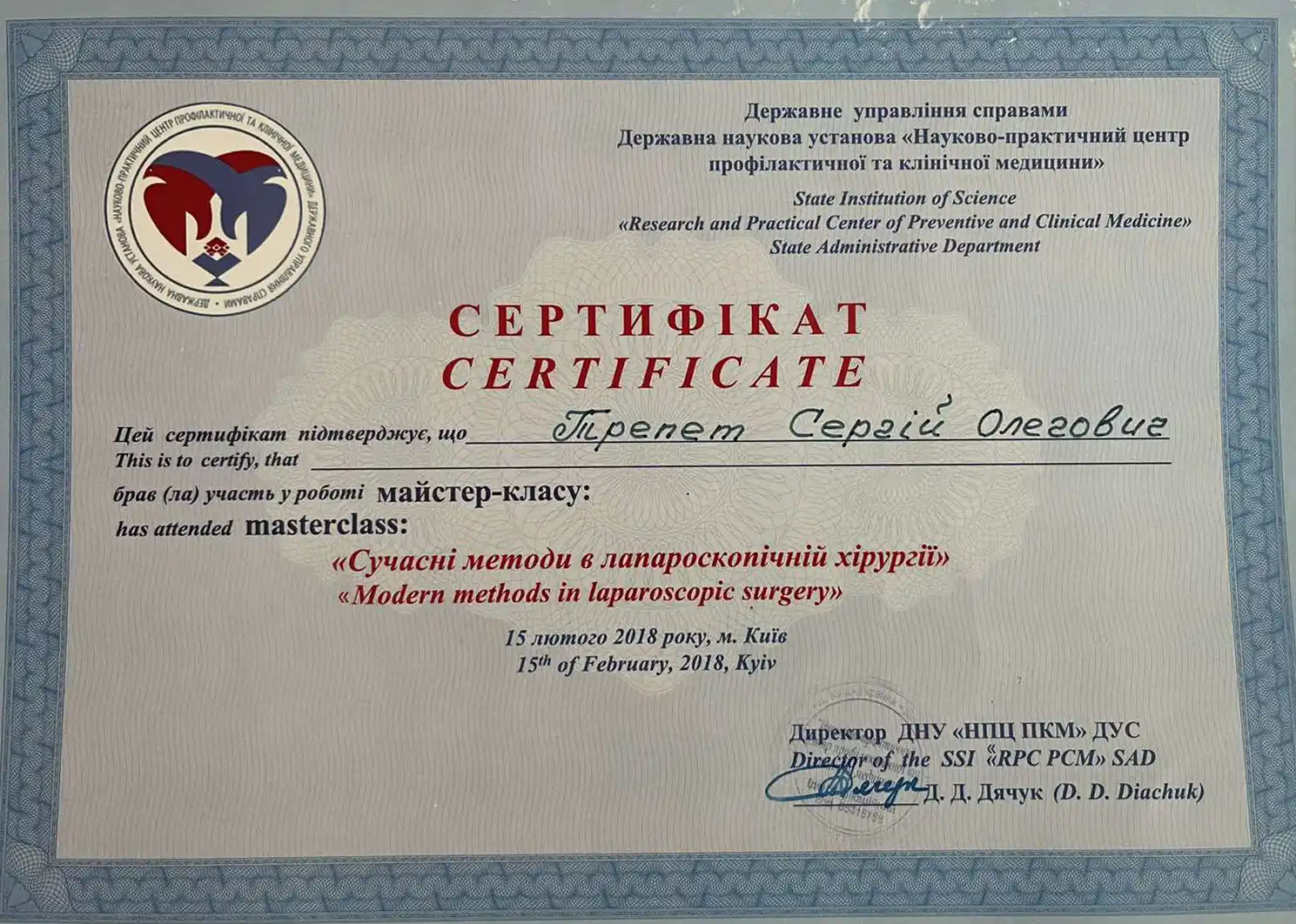
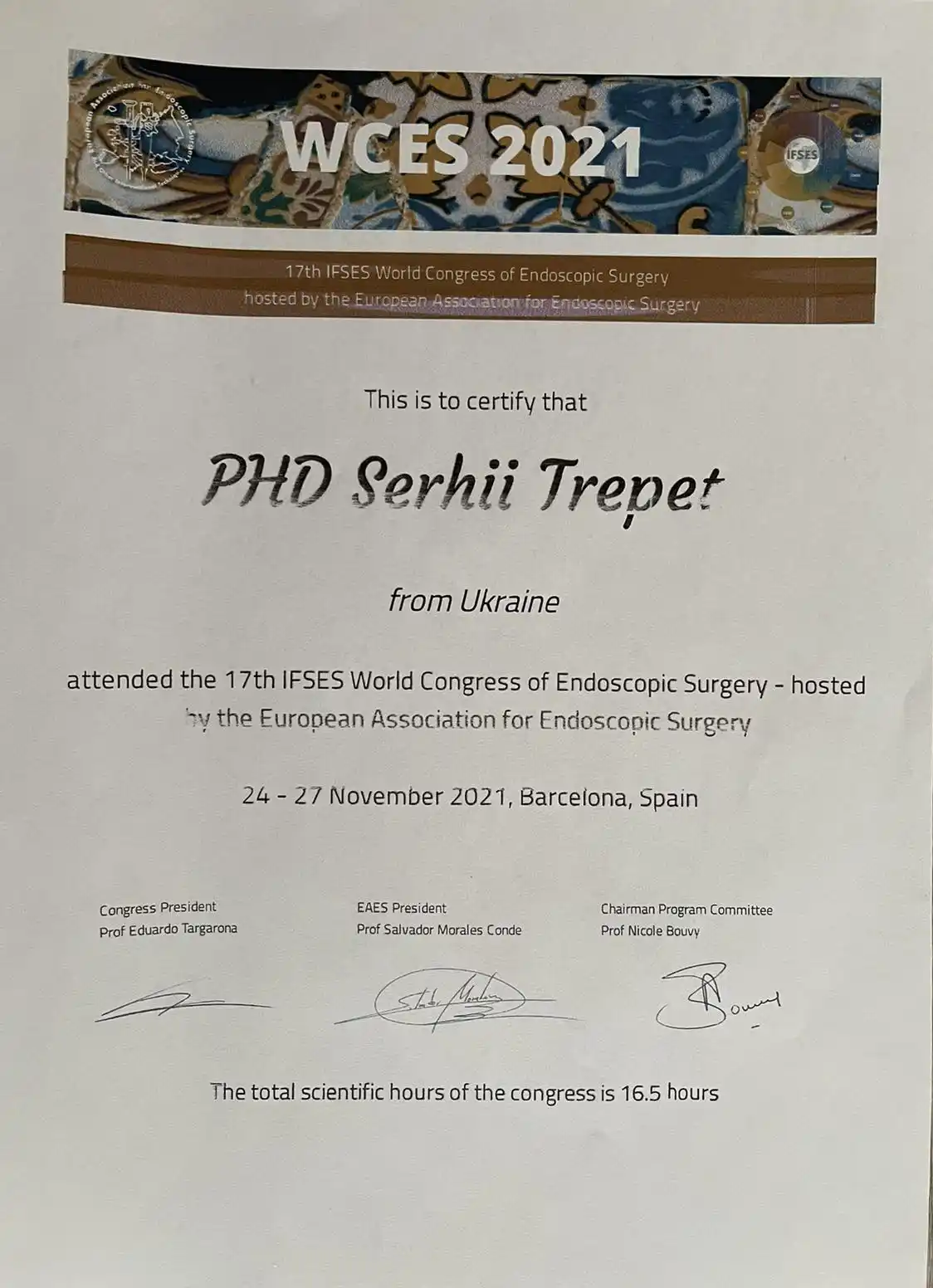
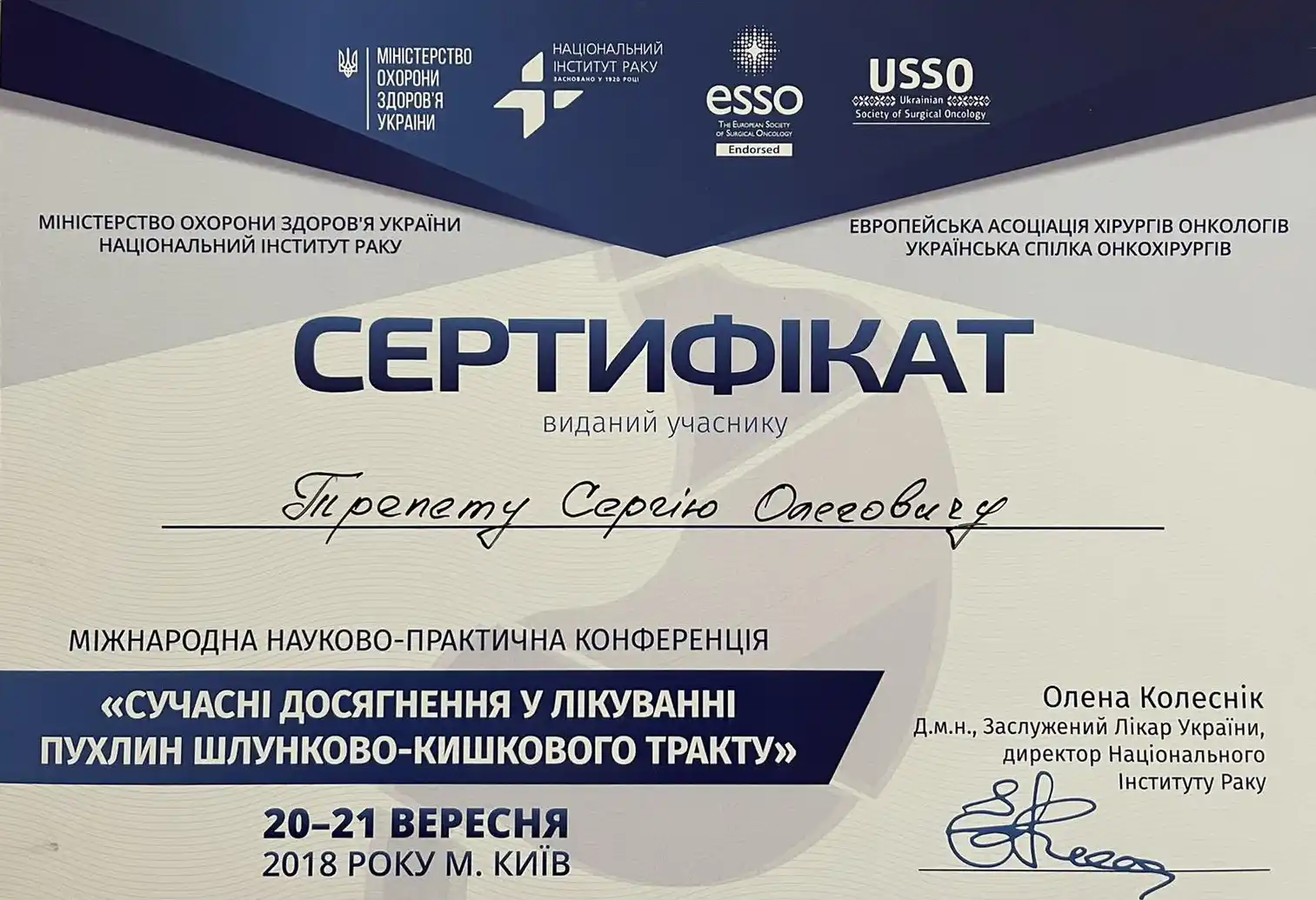
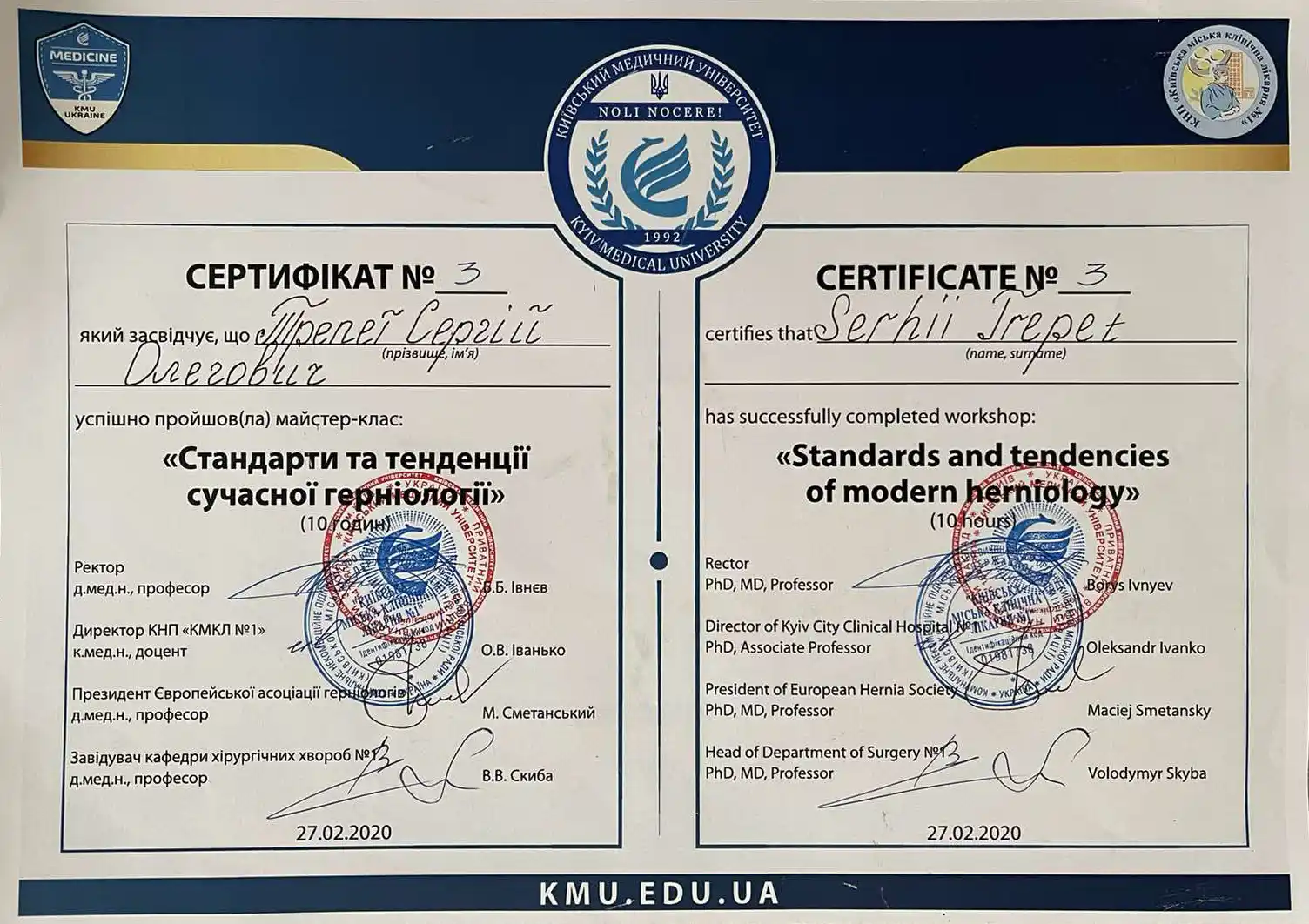
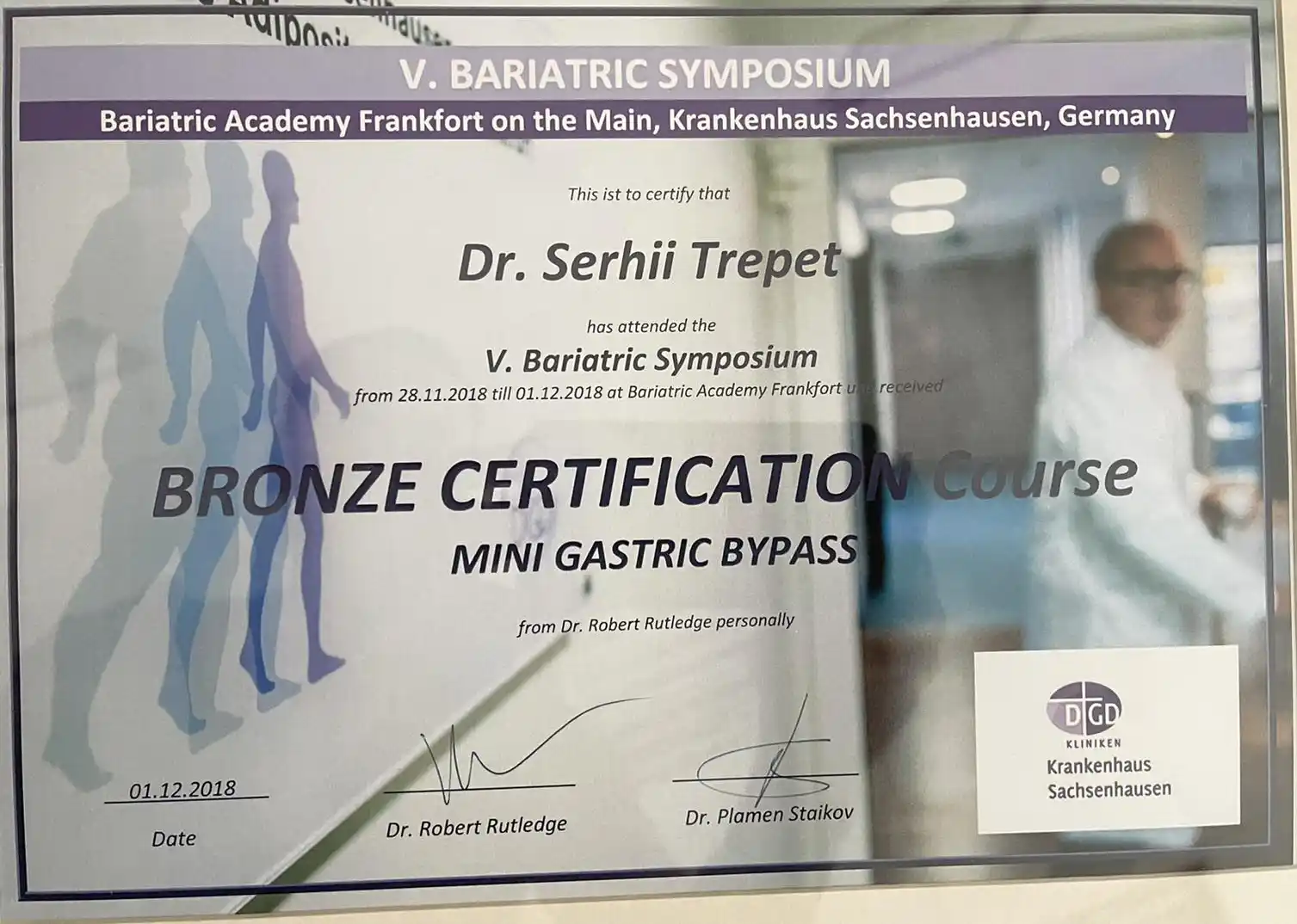
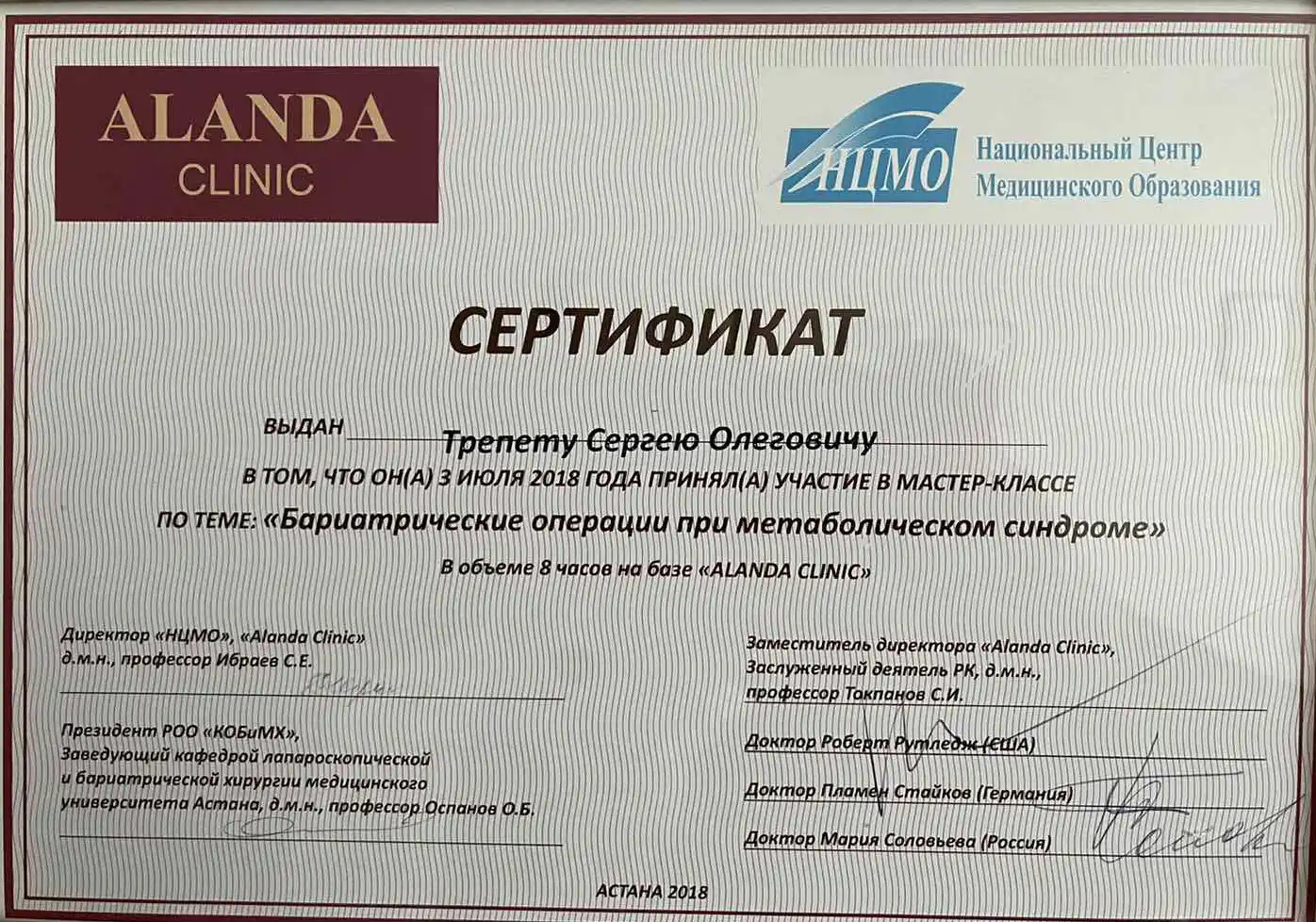
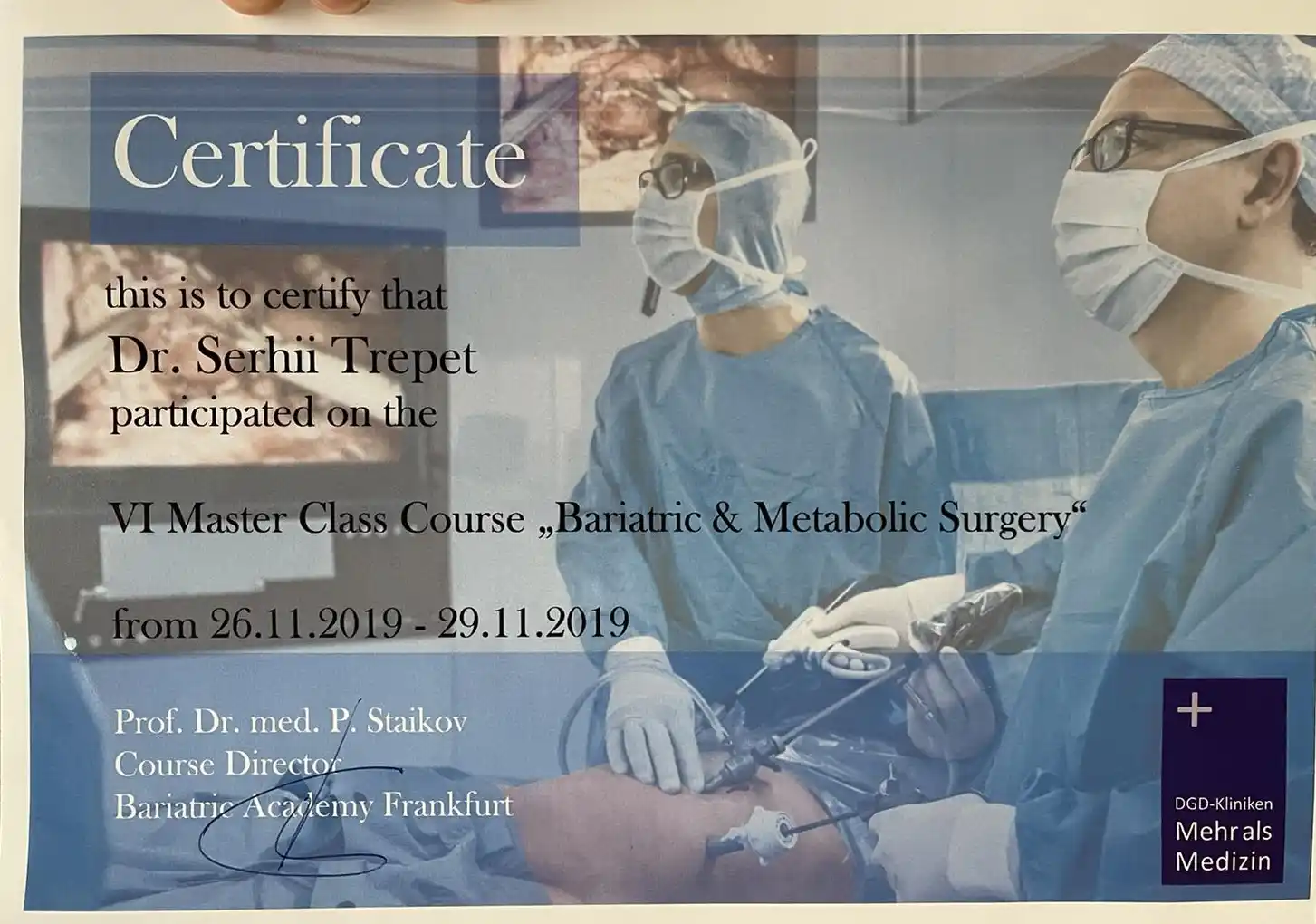
International certifications:
✔ MGB Bronze Certification Course 2018,
✔ Operations Course Master Class
✔ Bariatric Surgery 2018, 2019
We apply innovative technologies and use only high-quality consumables. This may affect the cost of gastric bypass surgery, but you can be assured of reliable and professional treatment. Online consultation available on Telegram 24/7.
Kyiv, Kharkivske Highway 121.
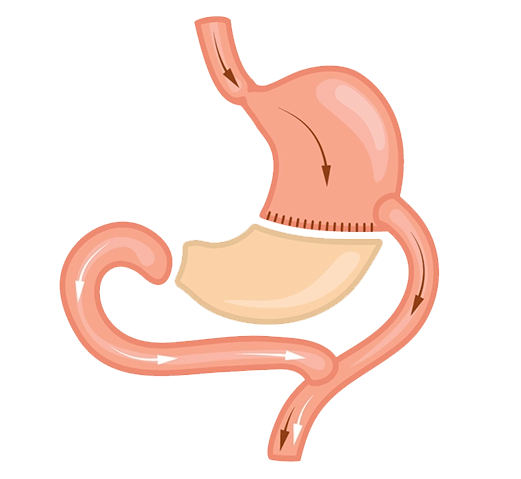
Gastric bypass surgery is considered the "gold standard" for obesity treatment. During the procedure, the stomach volume is reduced, and the small intestine is reconstructed. No resection is performed; instead, part of the organ is isolated to exclude it from the digestive process.
The surgeon creates a small pouch with a volume of 20-50 ml (normally, its volume reaches up to 1200 ml) and connects it to the small intestine to create a new pathway for food. This way, the food bypasses most of the stomach and duodenum.
As a result of reducing the stomach's size, the person consumes less food and feels full quickly. Due to the shortened digestive tract, the absorption of nutrients (especially fats and carbohydrates) is impaired, leading to fewer calories entering the body.
The surgery provides a triple effect:

Main advantages of the surgery:
The main drawback is the need for constant intake of vitamins and minerals.
Pregnancy is contraindicated for 1-2 years after surgery.
It is advisable to change eating habits by eliminating fatty and fried foods, alcoholic and carbonated drinks, or start engaging in sports and leading an active lifestyle. Otherwise, overeating and stomach stretching by 30-60% may occur, leading to partial weight gain.
Stories and reviews from our patients
Wonderful specialists. They greeted me, showed me around, and explained everything. The doctor is not focused on performing surgery just for the sake of it, and that is the most important thing. Now I am confident that the specialists are interested in my recovery, not just their own profits, which is a crucial point for all of us.

After two pregnancies with cesarean sections, the removal of a fibroid, and then a complete hysterectomy in 2016, my lower abdomen became loose, covered with adhesions and stretch marks. Given that as I age I ... Read more

Surgeon of the highest category. Candidate of Medical Sciences. Work experience – 40 years.
International certifications:
✔ MGB Bronze Certification Course 2018,
✔ Operations Course Master Class
✔ Bariatric Surgery 2018, 2019
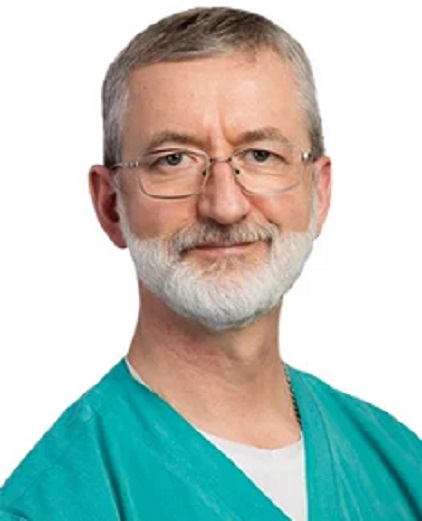
Anesthesiologist of the highest category. 39 years of experience.








The surgery is recommended in the following cases:
Gastric bypass is not performed in cases of stomach ulcers, type 1 diabetes, cancer, tuberculosis, liver and kidney failure, mental disorders, pregnancy, lactation, alcohol and drug dependence, as well as in individuals with a body mass index below 30.