

In bariatric surgery, the anesthesiologist makes sure the patient falls asleep safely, goes through the operation without pain and wakes up calmly. At our center this is the job of Vitalii Korchak, a senior-category anesthesiologist with 39 years of experience and head of the Department of Anesthesiology and Intensive Care at Kyiv City Clinical Hospital No. 1. In this article we explain how he works with patients and why his role in bariatric surgery matters so much.
Most patients ask about the surgeon at their consultation: who operates and how many procedures they have done. But one of the most common questions is different: "Will I definitely wake up after anesthesia?" The anesthesiologist is the one who answers it.
Who Vitalii Korchak is
Vitalii Korchak graduated from Bogomolets National Medical University. Today he works at Kyiv City Clinical Hospital No. 1, where he heads the Department of Anesthesiology and Intensive Care. He is also an assistant professor and teaches young doctors.
- 39 years of medical practice;
- highest qualification category;
- experience in anesthesia for laparoscopic surgery, including bariatric procedures;
- works in one team with bariatric surgeons Serhii Trepet and Tair Emir-Useinov.
The doctors' qualification documents are collected on the page "Licenses and Certificates".
Why the anesthesiologist is especially important in bariatric surgery
Anesthesia for a person of normal weight and for a patient with a BMI of 40+ are two different tasks. People with severe obesity more often have:
- high blood pressure and heart disease: the heart already works under extra load;
- type 2 diabetes: blood sugar has to be controlled before, during and after surgery;
- sleep apnea: breathing pauses during sleep that affect the choice of drugs and waking up;
- airway features: intubation and lung ventilation require experience;
- risk of blood clots: prevention starts before the operation begins.
That is why an anesthesiologist in bariatric surgery does more than "put you to sleep". He assesses the risks in advance and decides together with the surgeon whether the body is ready for the operation.
Step 1. Examination before surgery
The patient meets the anesthesiologist before the operation. Vitalii Korchak reviews the test results, examines the patient, listens to the heart and lungs, and asks about chronic conditions and allergies. The tests needed for this are described in the article "Preparation for Bariatric Surgery".
To make the conversation useful, prepare:
- a list of all your medications, especially blood thinners and drugs for blood pressure and blood sugar;
- information about allergies and how you tolerated anesthesia before;
- details about your sleep: snoring, breathing pauses, whether you use a CPAP machine;
- the questions that worry you. It is better to ask them in advance than to worry on the day of surgery.
If the tests show that the risk is too high right now, the operation may be postponed to first adjust blood pressure, blood sugar or sleep apnea treatment. Some conditions are contraindications to bariatric surgery altogether.
Step 2. Anesthesia during surgery
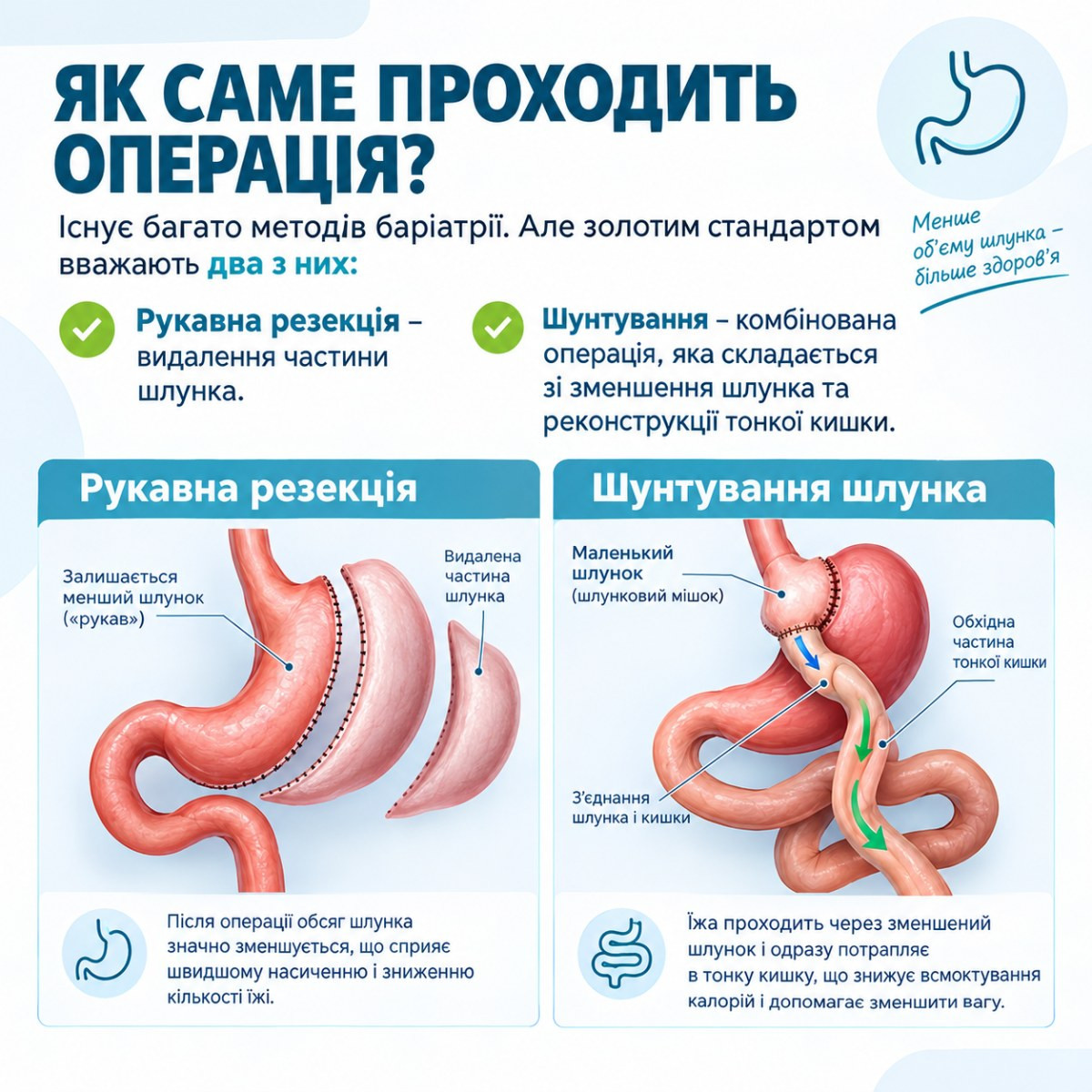
Most bariatric procedures, including sleeve gastrectomy and gastric bypass, are performed laparoscopically under general anesthesia. Which operation suits which patient is explained in the article "The most effective bariatric surgery for weight loss".
| Method | When it is used |
|---|---|
| Endotracheal (general) anesthesia | The main method for laparoscopic bariatric surgery |
| Intravenous anesthesia | Short procedures and endoscopic interventions, such as gastric balloon placement |
| Inhalation anesthesia | Maintaining anesthesia during the operation |
| Regional and nerve block anesthesia | In addition, for pain relief after surgery |
Drug doses are chosen based on weight and other conditions. Throughout the operation the anesthesiologist continuously monitors blood pressure, pulse, breathing, blood oxygen, temperature and kidney function. The department has modern anesthesia machines and monitors, and a 24-hour express laboratory runs tests during and after surgery.
Step 3. Waking up and the first hours after surgery
The anesthesiologist's work does not end with the operation. He:
- ensures a smooth awakening and checks that breathing has fully recovered;
- controls pain and nausea so the patient can get up and walk as early as possible;
- monitors the patient during the first hours and provides intensive care if needed.
Getting up early after bariatric surgery helps prevent blood clots and speeds up recovery. Good pain control makes this possible.
The most common fears about anesthesia
"I am afraid I won't wake up." Modern anesthesia is controlled: the anesthesiologist sees the body's readings all the time and adjusts the doses accordingly. Risks are assessed before surgery, so a patient who is not ready is not operated on.
"I'm not 30 anymore, and I have heart problems." Age and other conditions mean more careful preparation, but not necessarily a refusal. How we make the decision for older patients is explained in the article "Can You Have Bariatric Surgery After 60".
"I have diabetes. What will happen to my blood sugar?" Blood sugar is monitored at every stage, and the medication plan is agreed with the doctors in advance. How surgery affects diabetes is covered in the article "Type 2 Diabetes After Bariatric Surgery".
Summary
Safe bariatric surgery is teamwork between the surgeon, the anesthesiologist and the medical staff. Vitalii Korchak assesses the risks before the operation, chooses the method of anesthesia, monitors the patient during surgery and in the first hours after it. If anesthesia is what worries you most, mention it at your consultation: your questions will be discussed in advance.
Frequently asked questions
Will I meet the anesthesiologist before surgery?
Yes. The anesthesiologist examines the patient, reviews the test results and discusses the type of anesthesia before the operation.
What kind of anesthesia is used in bariatric surgery?
Most often general endotracheal anesthesia. Short endoscopic procedures may be done under intravenous anesthesia, and regional methods are added for pain relief after surgery.
Is anesthesia safe for people with high body weight?
With obesity the risks are higher, so careful preparation, correct dosing and constant monitoring are needed. This is exactly what an anesthesiologist experienced in bariatric surgery does.
Does sleep apnea affect anesthesia?
Yes, it matters for the choice of drugs and for monitoring after waking up. Be sure to tell the anesthesiologist about snoring, breathing pauses during sleep and a CPAP machine if you use one.
Which medications should I stop before surgery?
This is decided individually. Do not stop any medication on your own: bring a full list of your medications, and the doctor will tell you what to change and when.
This material is for information only and does not replace a consultation with a doctor. The anesthesiologist chooses the method of anesthesia after an in-person examination.