

If you have spent years losing weight only to regain it, sooner or later you may ask yourself: is it time to consider medical treatment options, and could surgery be right for me? These questions often come with doubts: “Isn't this too radical?”, “Does it mean I have failed?”, “How safe is it?”
I explain it the same way I would during a consultation. Surgical treatment of obesity is neither punishment for unsuccessful diets nor an “easy way out.” It is one of the medical treatment options, with clear indications, risks, and requirements for patients. Below, I explain what this treatment involves, who may be considered for surgery, how the main procedures differ, and what to weigh before making a decision.
What Is Surgical Treatment of Obesity?
Obesity is a chronic disease, not a matter of willpower. The body tends to “defend” its regained weight: after weight loss, hunger may increase, hormonal regulation of appetite changes, and energy expenditure decreases. As a result, many people return to their initial weight after dieting. This is not a character flaw but part of the biology of the disease.
Obesity treatment involves several approaches: nutrition, physical activity, behavioral changes, medication, endoscopic procedures, and surgery. These approaches do not compete with one another; they can complement each other. The important thing is to choose a treatment that matches the severity of the disease and the individual's health status.
Bariatric surgery involves procedures on the digestive tract that help reduce body weight and alter metabolism. International guidelines refer to these as metabolic and bariatric procedures because they affect not only weight but also associated conditions, including type 2 diabetes. Their mechanism is not simply about making the stomach smaller. They also change the signals between the intestines and the brain that regulate hunger and satiety.
I emphasize to my patients that bariatric surgery does not replace dietary changes. It works in combination with them and with long-term medical follow-up. For an overview of the basic principles, see “What Is Bariatric Surgery?”
When I Recommend Considering Bariatric Surgery
BMI as a Guideline
The first point of reference is still the body mass index (BMI). According to the international IFSO and ASMBS guidelines published in 2022:
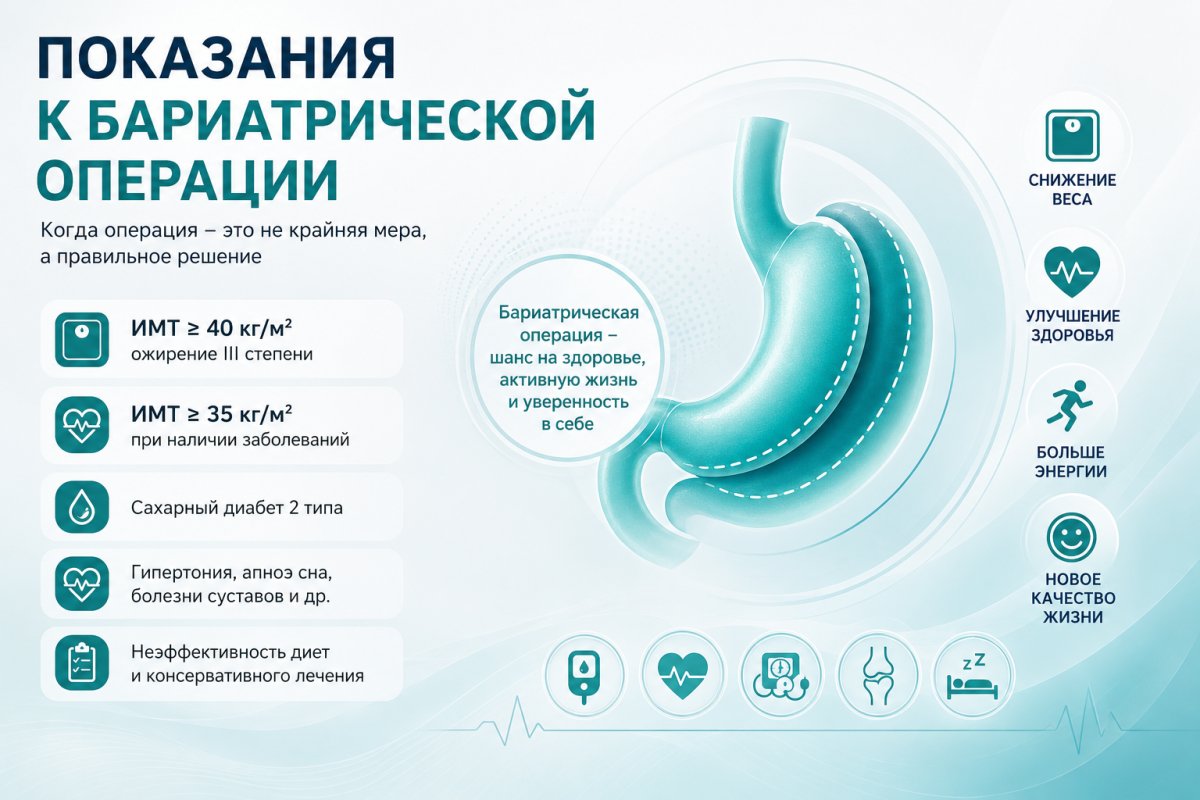
- Surgery is recommended for patients with a BMI of 35 kg/m² or higher, regardless of the presence or severity of associated diseases.
- Surgery should be considered for patients with a BMI of 30-34.9 kg/m² if they have a metabolic disease, such as type 2 diabetes.
- For people of Asian ancestry, the thresholds are lower: a BMI of 25 or higher indicates clinical obesity, and surgery should be offered at a BMI of 27.5 or higher.
These recommendations replaced the 1991 consensus of the US National Institutes of Health, under which surgery was available only to people with a BMI of 40 or higher, or 35 or higher in the presence of associated diseases. If you find only these older figures online, the information is outdated. However, national requirements and the protocols of individual medical institutions may include additional criteria, so this should be discussed during a consultation.
Why BMI Is Only the Starting Point
BMI does not show where body fat is distributed, how much muscle mass a person has, or how their metabolism functions. That is why, when evaluating a patient, I look beyond the number:
- Associated conditions, including type 2 diabetes or prediabetes, high blood pressure, sleep apnea, fatty liver disease, joint problems, and weight-related menstrual irregularities or infertility.
- Previous treatment experience: what methods have been tried, how systematic they were, and whether treatment was supervised by a doctor rather than consisting of repeated self-directed diets.
- Overall health, including the condition of the heart, lungs, liver, and gastrointestinal tract, as well as anesthesia-related risks.
- Eating behavior and psychological well-being, including possible eating disorders, depression, or substance dependence.
- Readiness for follow-up care: whether the patient can attend regular check-ups, take vitamins, and make dietary changes.
- Future plans, such as pregnancy.
Surgery is not the mandatory next step for every person with excess weight. If your BMI meets the criteria, it means that discussing surgery is reasonable, not that the decision has already been made. For more information, see “Why BMI Alone Is Not Enough to Decide on Bariatric Surgery” and “Indications for Bariatric Surgery.”
Which Procedures Are Used to Treat Obesity?
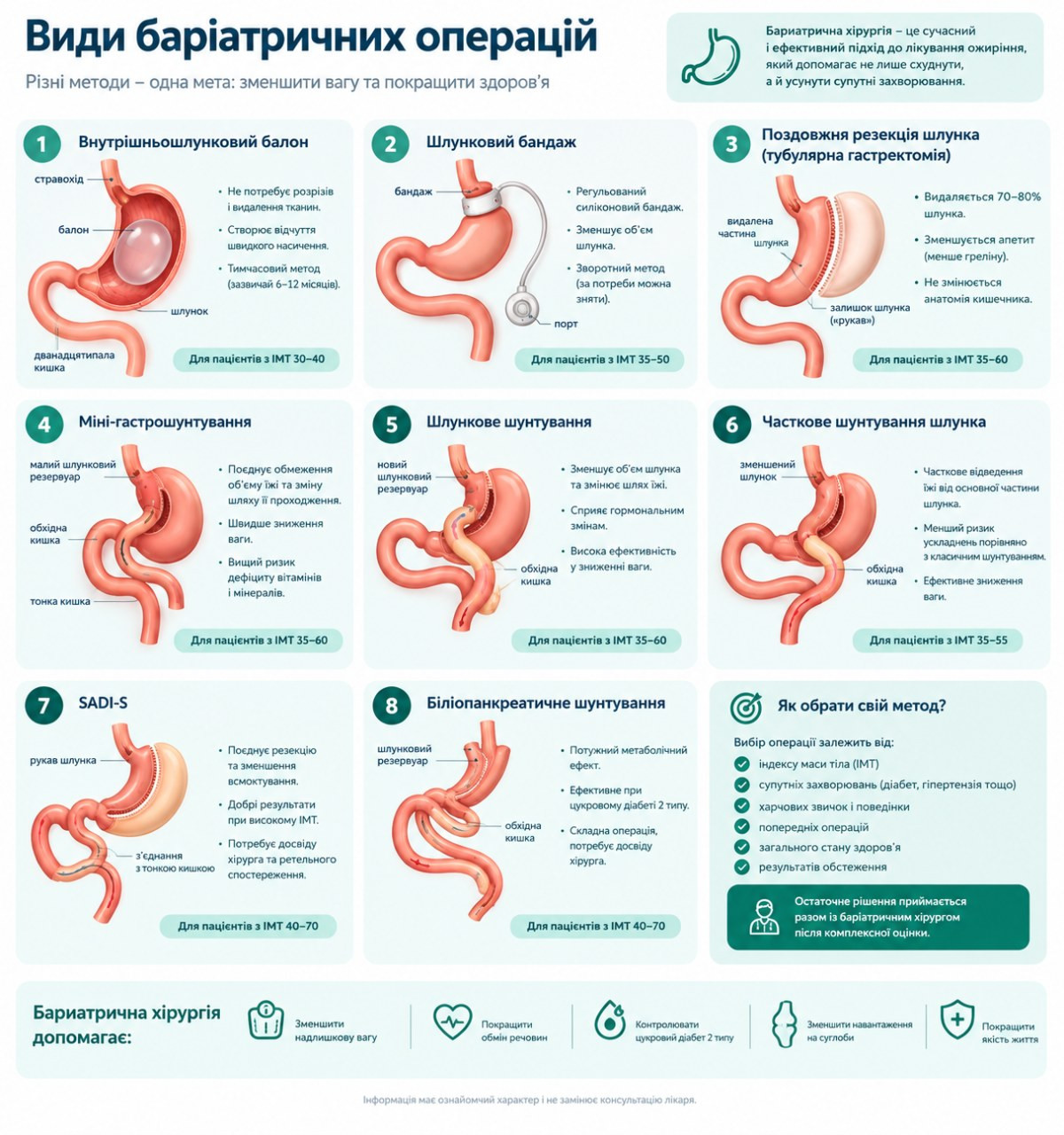
Several surgical techniques are available, but two account for the vast majority of bariatric procedures performed worldwide: sleeve gastrectomy and gastric bypass. I will focus on these two. Other procedures have more specific indications and are discussed on an individual basis.
Sleeve Gastrectomy
During sleeve gastrectomy, the surgeon removes most of the stomach along its greater curvature and creates a narrow tube. The intestines are not rearranged, and food follows its usual route through the digestive tract. The stomach's capacity is reduced, and hormonal regulation of appetite also changes. The procedure is performed laparoscopically. For more information about the technique and variations, see “Sleeve Gastrectomy: Main Types of Procedures.”
Technically, this procedure is less complex than gastric bypass, and the risk of nutritional deficiencies is generally lower. One disadvantage is that it can cause or worsen heartburn and acid reflux.
Gastric Bypass
During Roux-en-Y gastric bypass, the surgeon creates a small pouch in the upper part of the stomach and connects it to a section of the small intestine, bypassing most of the stomach and the beginning of the small intestine. Food reaches the intestine more directly, and hormonal signals related to satiety change more significantly. The procedure is technically more complex and requires particular attention to vitamin and micronutrient supplementation. For information about life after surgery, see the recommendations for patients after gastric bypass.
How Do These Procedures Differ, and Why Does the Choice Depend on the Clinical Situation?
| Criterion | Sleeve Gastrectomy | Gastric Bypass |
|---|---|---|
| What happens | Most of the stomach is removed | A small stomach pouch is created, and part of the intestine is bypassed |
| Intestinal rearrangement | No | Yes |
| Acid reflux | May develop or worsen | Usually better tolerated; often considered when reflux is significant |
| Risk of nutritional deficiencies | Lower, but monitoring is still necessary | Higher, requiring closer monitoring |
| Technical complexity | Lower | Higher |
Two major randomized studies, SM-BOSS and SLEEVEPASS, compared these procedures over five years. Weight loss was broadly comparable, although gastric bypass produced slightly greater average weight loss. In the SM-BOSS study, the difference was not statistically significant, but reflux improved more often after gastric bypass and worsened more often after sleeve gastrectomy. These procedures are not interchangeable. The choice depends on reflux, diabetes, the severity of obesity, previous surgeries, your priorities, and the experience of the surgical team. For a comparison, see “Sleeve Gastrectomy or Gastric Bypass: Which Should You Choose?”
How I Determine Whether Surgery Is Appropriate for a Patient
The decision begins with a consultation and medical assessment, not simply with weighing the patient. I review the history of weight changes, previous treatment attempts, associated conditions, medications, eating habits, and expectations. Depending on the situation, further investigations may include laboratory tests, cardiac assessment, abdominal ultrasound, gastroscopy, and screening for sleep apnea. Current recommendations support a multidisciplinary approach involving an endocrinologist, anesthesiologist, dietitian, and, when appropriate, a psychologist or psychiatrist.
I also assess contraindications and conditions that may require postponing surgery or choosing a different treatment approach. These include, among others:
- Severe, uncontrolled heart or lung disease when the risks of anesthesia outweigh the expected benefits.
- Active alcohol or psychoactive substance misuse.
- Severe untreated eating disorders or an unstable mental health condition.
- Pregnancy.
- An inability to follow medical recommendations and attend follow-up appointments.
This is not an exhaustive list. More information is available in “Contraindications to Bariatric Surgery.”
At the end of the consultation, we discuss together what benefits can reasonably be expected in the individual case, which risks are most relevant, and what alternatives are available. Weight alone is not enough to make the decision: for two patients with the same BMI, surgery may be appropriate for one and unsuitable or premature for the other.
What Results Can You Expect?
Results vary from person to person. Most patients achieve substantial weight loss. The greatest reduction usually occurs during the first one to two years, after which weight tends to stabilize. However, the amount of weight lost depends on the type of procedure, starting characteristics, age, eating habits, associated conditions, and adherence to medical recommendations. I do not promise patients a specific number of kilograms lost because it is impossible to predict this accurately.
Improvement in associated conditions is not guaranteed either. Type 2 diabetes, high blood pressure, sleep apnea, fatty liver disease, and joint pain often improve or require less medication, but the degree of improvement varies. Outcomes are influenced by the duration of the disease, the extent of organ damage, and the patient's baseline metabolic health. Some patients achieve remission as their weight decreases, while others simply need less treatment.
International IFSO and ASMBS guidelines indicate that long-term evidence consistently supports the safety and effectiveness of these procedures, and some randomized studies now include follow-up data extending to 10 years. Nevertheless, some people regain part of their weight over time. That is why I assess success using more than the number on the scale: I also consider blood glucose, blood pressure, sleep, mobility, and overall well-being. For more information, see “Weight Regain After Surgery” and “Long-Term Follow-Up.”
What You Need to Know About Risks and Life After Surgery
Possible Complications
Every operation carries risks, and I do not believe it is right to conceal them. Early complications may include bleeding, infection, staple-line or anastomotic leakage, and venous thrombosis. Later complications may include narrowing at a surgical connection, ulcers, hernias, gallstones associated with rapid weight loss, heartburn, and dumping syndrome after gastric bypass. For comparison, in the Swiss randomized SM-BOSS study, approximately 16% of patients after sleeve gastrectomy and 22% after gastric bypass required additional surgery or an intervention within five years. Some of these procedures were planned or related to hernias and reflux. More information about specific conditions is available in the articles on heartburn after sleeve gastrectomy and dumping syndrome.
Nutrition After Surgery
Diet is reintroduced in stages after surgery: liquids first, followed by puréed foods, then soft foods, and eventually regular food. Portions should be small. Patients should eat slowly, chew thoroughly, prioritize protein, and drink enough fluids. Sugary drinks, foods high in sugar, and alcohol may be poorly tolerated. I tailor the specific dietary plan to each patient, taking into account the procedure and their medical condition.
Follow-Up and Prevention of Nutritional Deficiencies
After surgery, the body may absorb lower amounts of certain nutrients. Those at risk of deficiency include iron, vitamin B12, folic acid, calcium, vitamin D, thiamine, and protein. Deficiencies often develop without obvious symptoms, which is why AACE/TOS/ASMBS guidance emphasizes lifelong follow-up and supplements prescribed by a doctor. Monitoring is usually more frequent during the first year and then takes place at least annually. The schedule depends on the type of surgery and individual risk factors. Temporary hair loss during the first few months is another common concern that is discussed separately.
Where to Start If You Are Considering Surgical Treatment for Obesity
In my opinion, the following steps can help you avoid rushing into a decision and gather the necessary information:
- Write down your weight history. When did your weight start increasing? Which methods have you tried? What were the results, and how did you feel during the process?
- Gather your medical information: diagnoses, medications, test results (glucose or HbA1c, lipid profile, liver function tests), and blood pressure readings. If you suspect diabetes or sleep apnea, arrange an assessment in advance.
- Discuss non-surgical options. A doctor who treats obesity, an endocrinologist, or a primary care physician can assess current medications and treatment programs. These may be sufficient for some people.
- Prepare questions for the surgeon. Which procedure is recommended for you, and why? Which risks are most relevant in your case? Who will provide follow-up care after surgery? What happens if a complication develops?
- Do not be afraid to seek a second opinion. A good specialist will respect that decision.
- Give yourself time. This is a decision that affects the years ahead, and there is no need to make it in a hurry.
This material is for informational purposes only and does not replace an in-person medical consultation. Treatment decisions are made only after an examination and appropriate assessment.
Frequently Asked Questions
Is it true that surgery is possible only when BMI is 40 or higher?
This reflects the criteria used in 1991. Today, IFSO and ASMBS recommend surgery for patients with a BMI of 35 or higher and allow it to be considered from a BMI of 30 when metabolic diseases are present. The thresholds are even lower for people of Asian ancestry. However, BMI is not the only criterion: the doctor also considers overall health, previous treatment, and individual risks.
Can modern medication replace surgery?
Medication and surgery are not competing approaches; they are different treatment tools. Medication alone may be sufficient for some people, and when BMI is not particularly high, it is reasonable to begin by discussing this option. For others, surgery may be more effective, especially in cases of severe obesity or complex associated conditions. The choice depends on the severity of the disease, treatment tolerance, the patient's preferences, and the availability of treatment options.
Does weight return after surgery?
Some patients regain part of their weight over time. This may be related to the biology of obesity, changes in eating habits, or missed follow-up appointments. Regular monitoring, adequate protein intake, physical activity, and medical support can reduce this risk. If your weight begins to increase, it is best to seek advice early rather than wait until substantial weight has been regained.
Do I need to take vitamins for the rest of my life?
In most cases, yes. This is particularly important after gastric bypass, but doctors usually recommend ongoing supplements and periodic blood tests after sleeve gastrectomy as well. The specific supplements, such as multivitamins, vitamin B12, calcium with vitamin D, and iron, depend on the procedure and the results of follow-up tests.
Are there age limits?
There is no strict universal age cutoff. International experts who participated in the 2024 IFSO survey reached a consensus that surgery may be considered for patients older than 65 and for people younger than 18. However, the assessment must be particularly thorough, taking into account associated conditions, anesthesia risks, and the patient's overall physiological reserve.